Product Walkthrough

See how Swarmix works

An enterprise AI workspace where agents plan, execute, and deliver results under your control. Choose your perspective below.

Business Teams IT / Security Engineering Compliance
Scroll
Getting Started
Set up your workspace and configure your first AI agents.
01 Getting Started

Your workspace at a glance

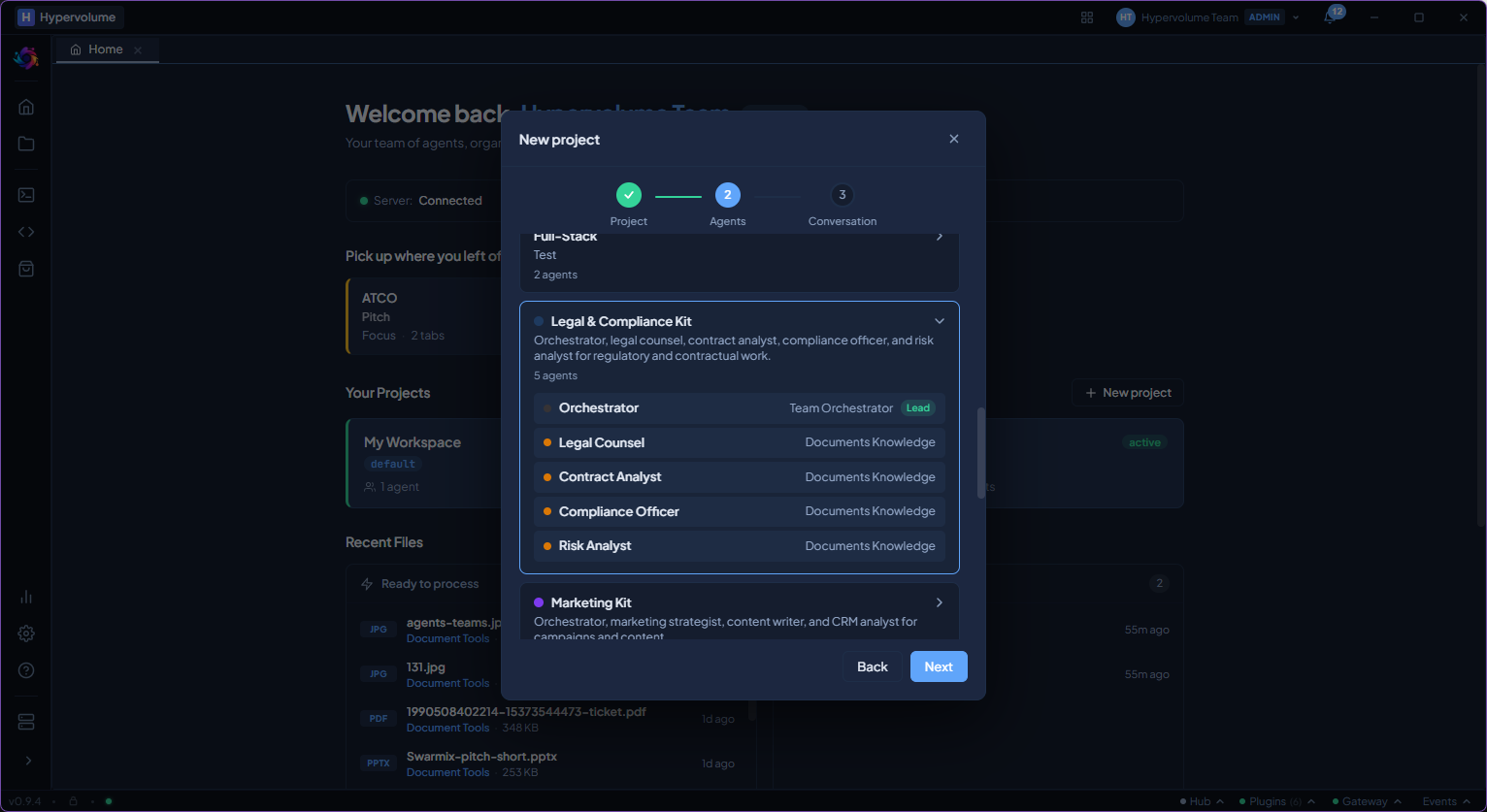
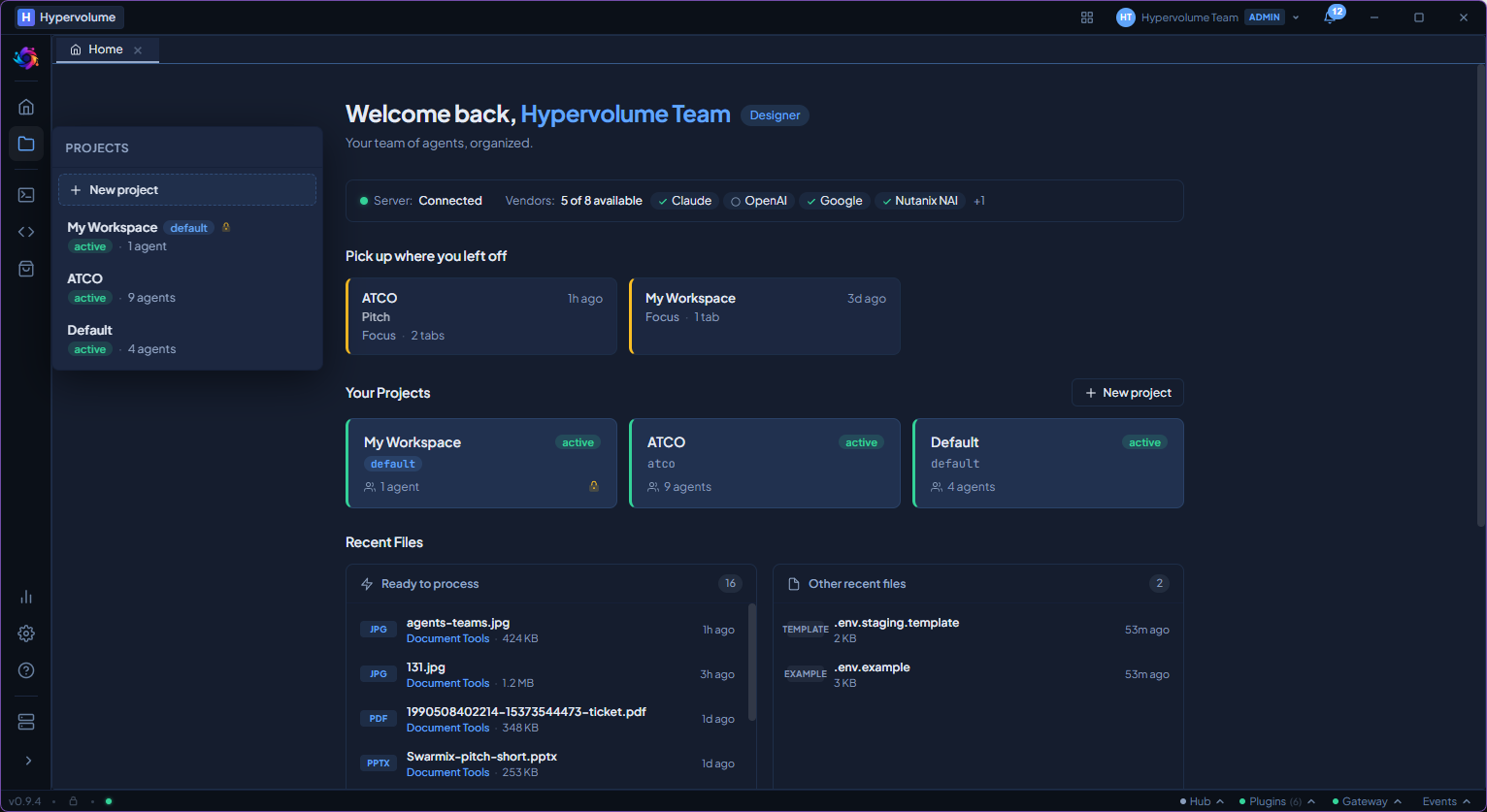
The desktop app opens to a project-based workspace. A sidebar gives you quick access to projects, agents, plans, knowledge, and settings.
Desktop AppProjectsAgents
Home screen with projects, recent files, and connected vendors
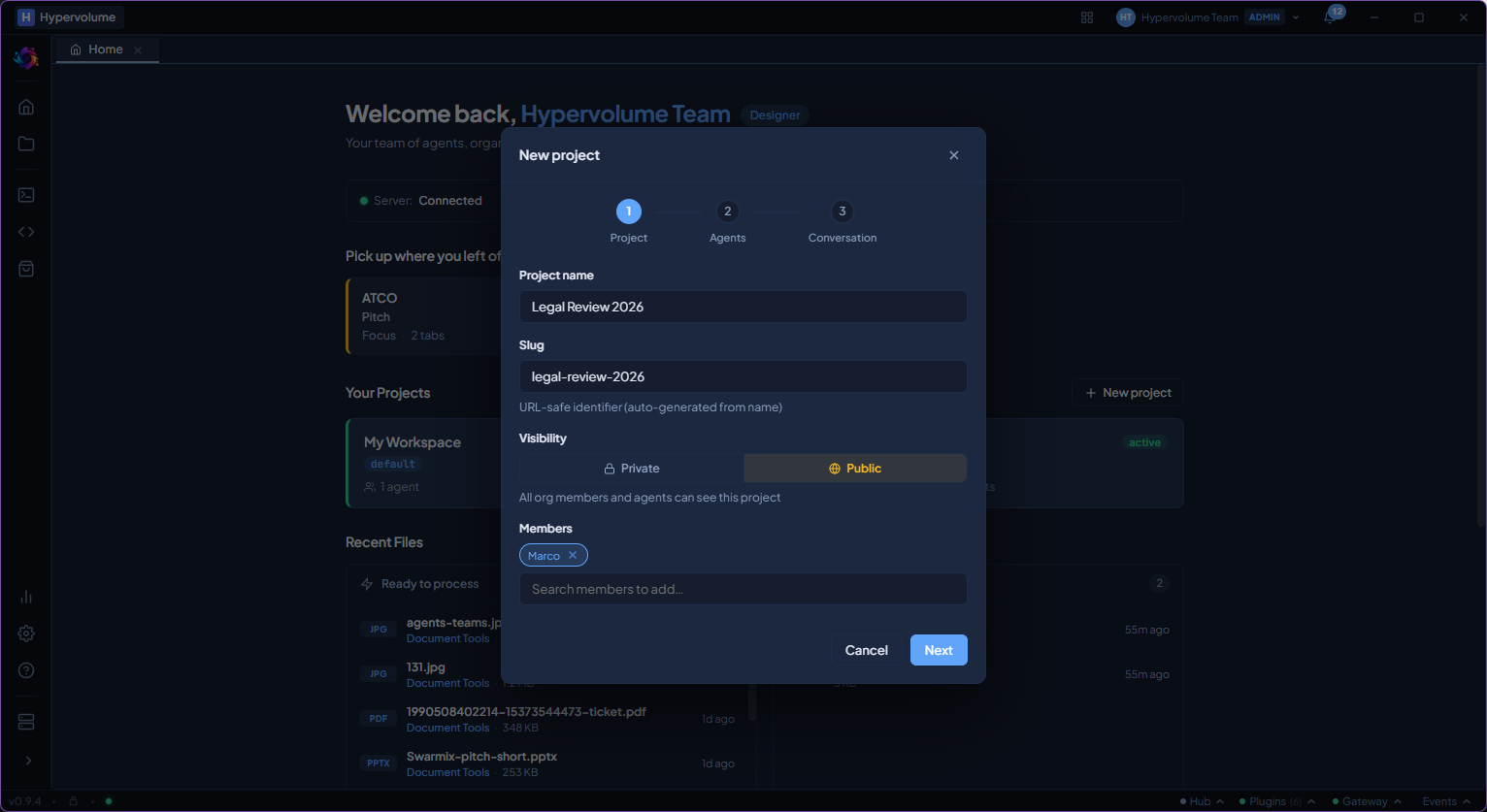
New project dialog: name, slug, visibility, and members
Pick an agent team preset with pre-configured roles
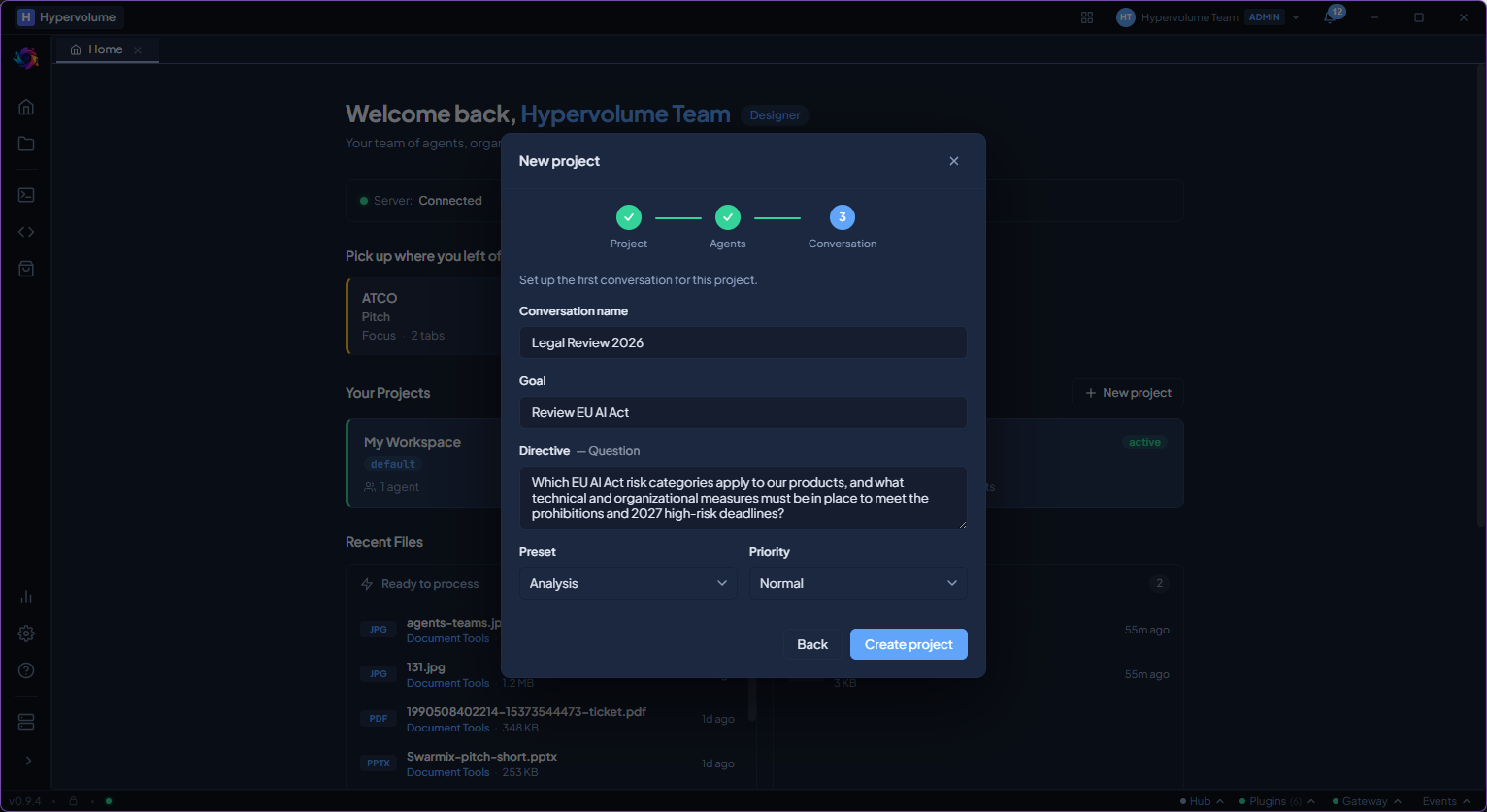
Set up the first conversation with goal and directive
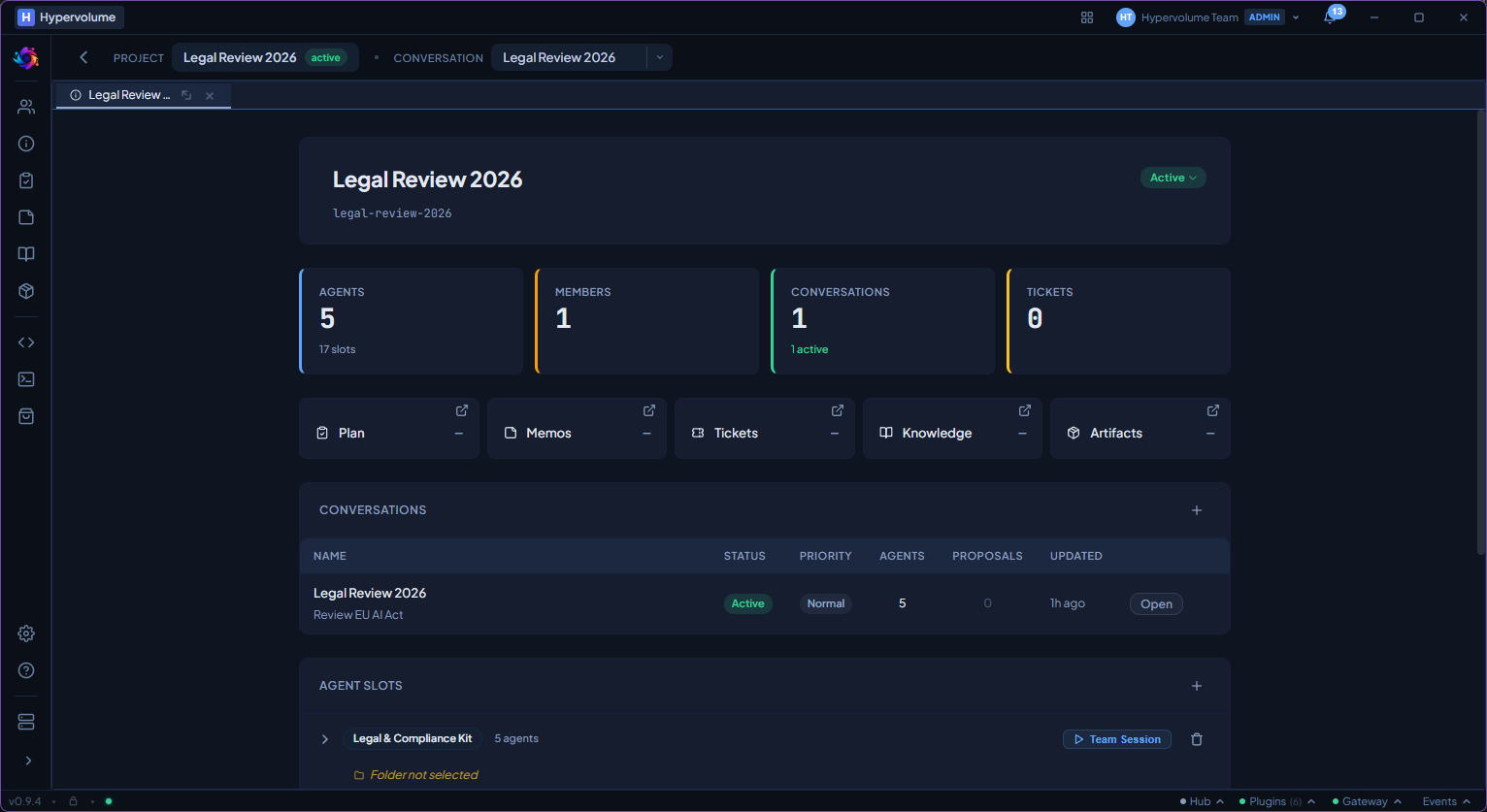
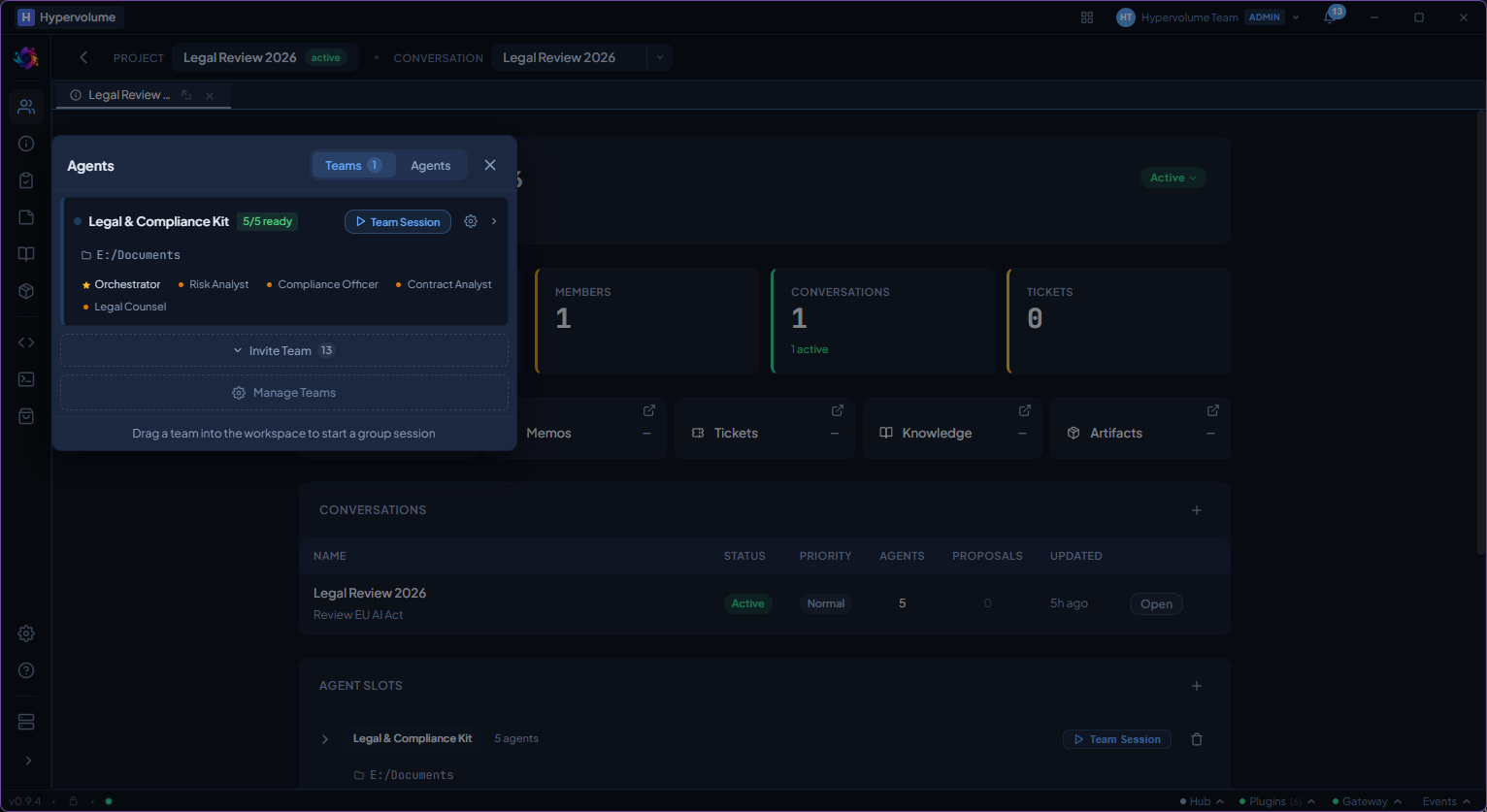
Project workspace showing agents, conversations, and tools
Sidebar
Icons for Home, Projects, Agents, Plans, Knowledge, Artifacts, Marketplace, Analytics, and Settings. Everything is one click away.
walkthrough/01-main-window.md
Project Context
Each project links to a local folder. The context panel shows the project name, path, active agents, and session history.
walkthrough/02-project-context.md
02 Getting Started

Configure an agent in two minutes

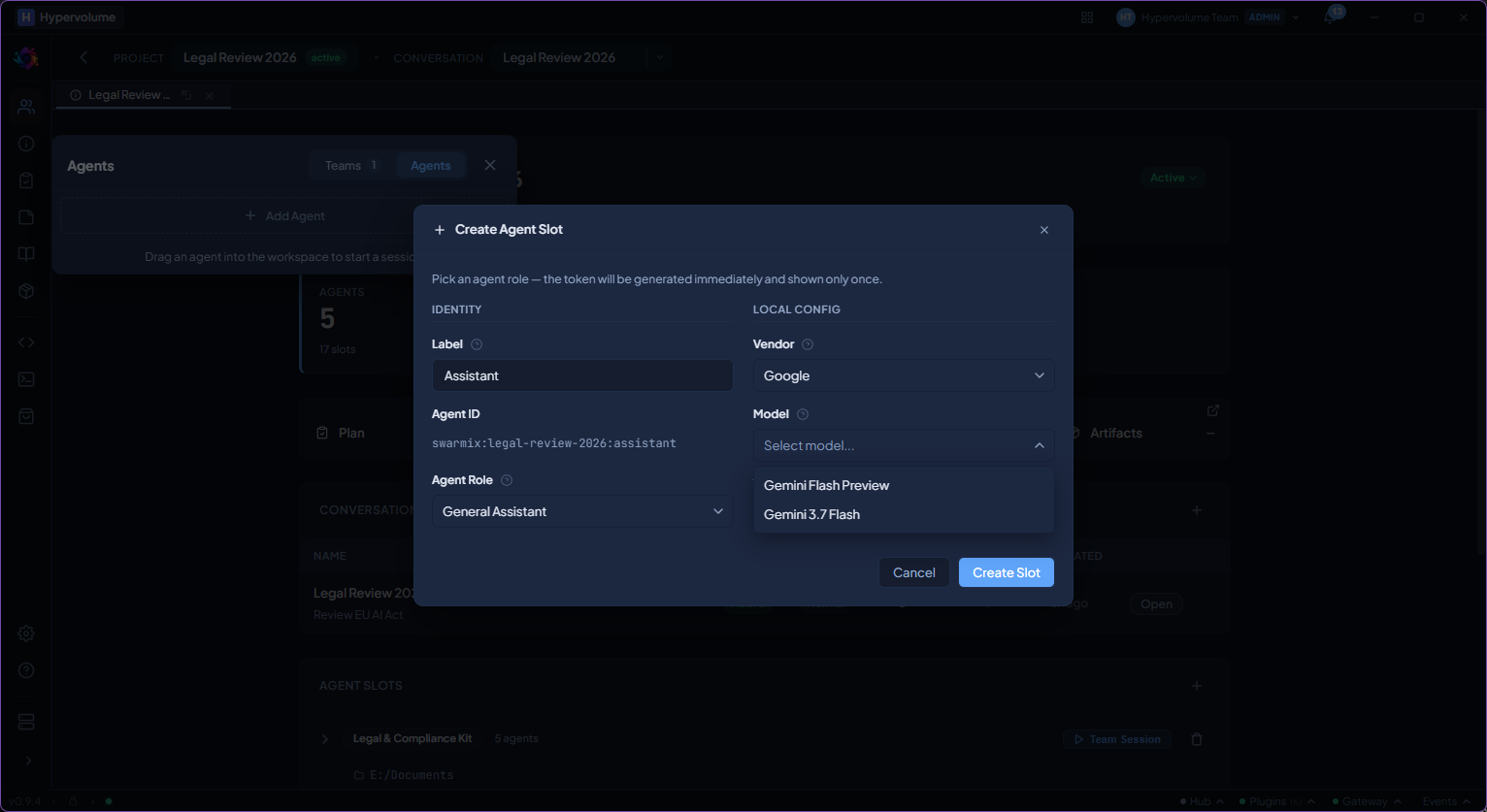
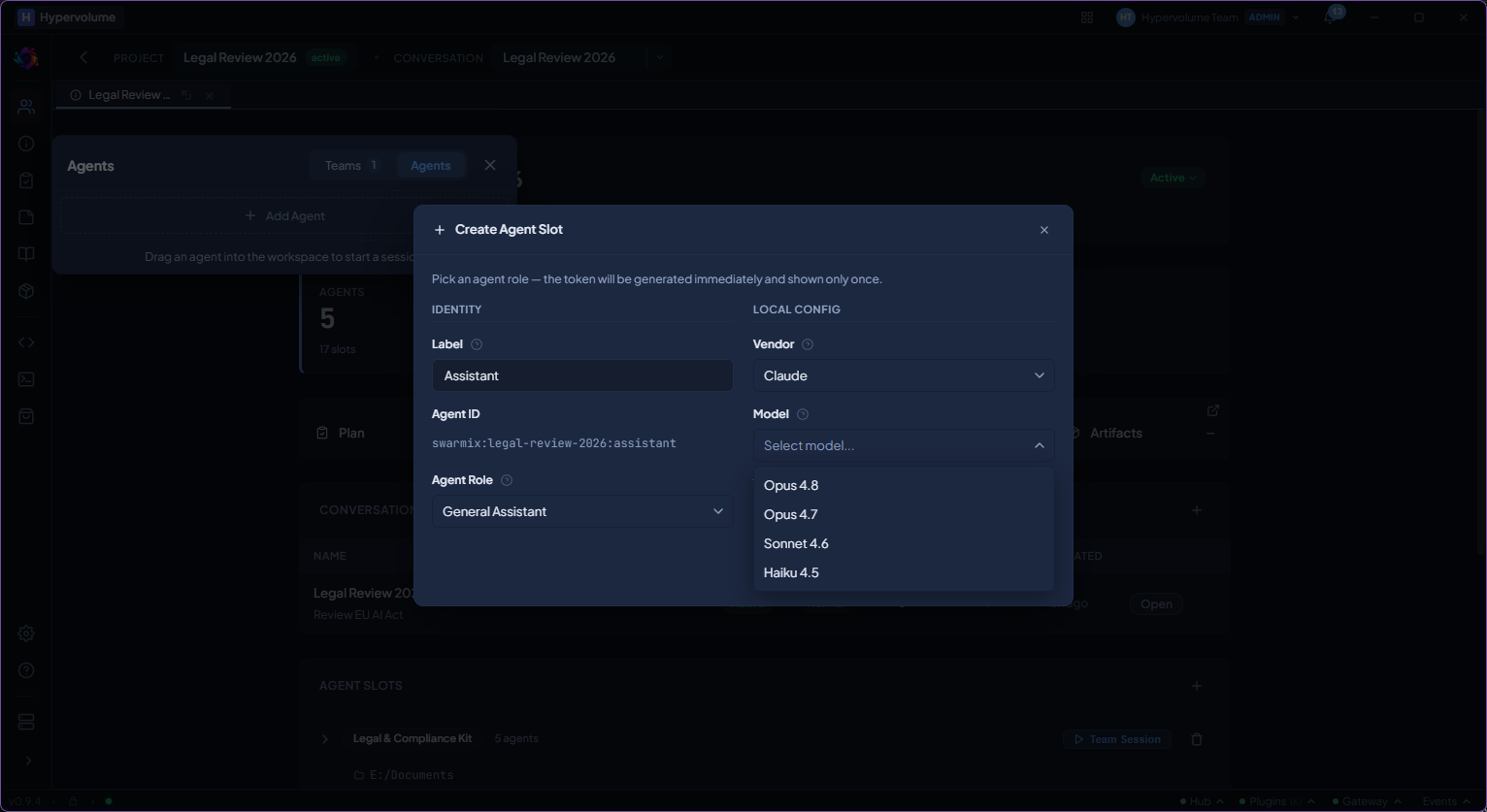
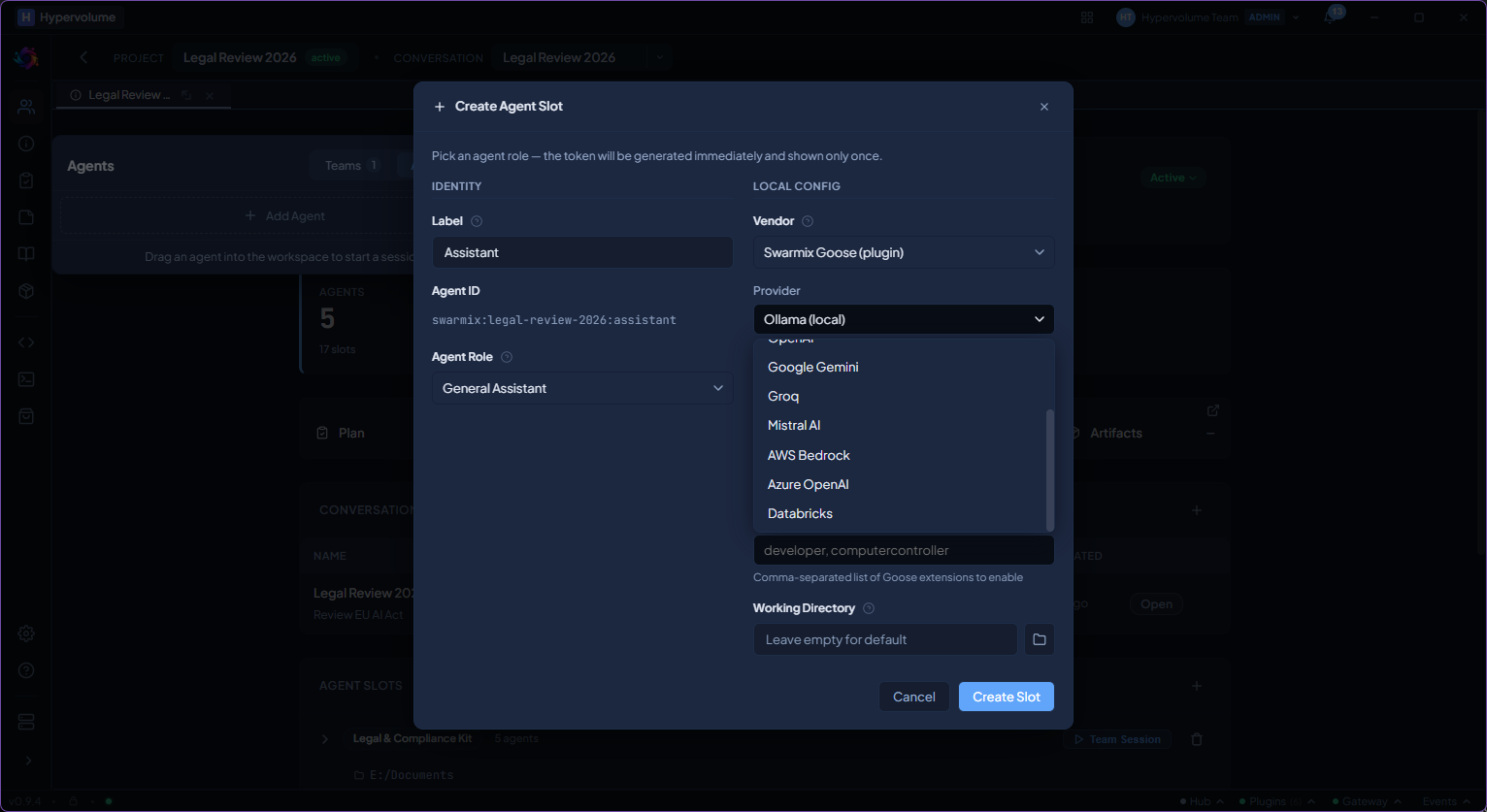
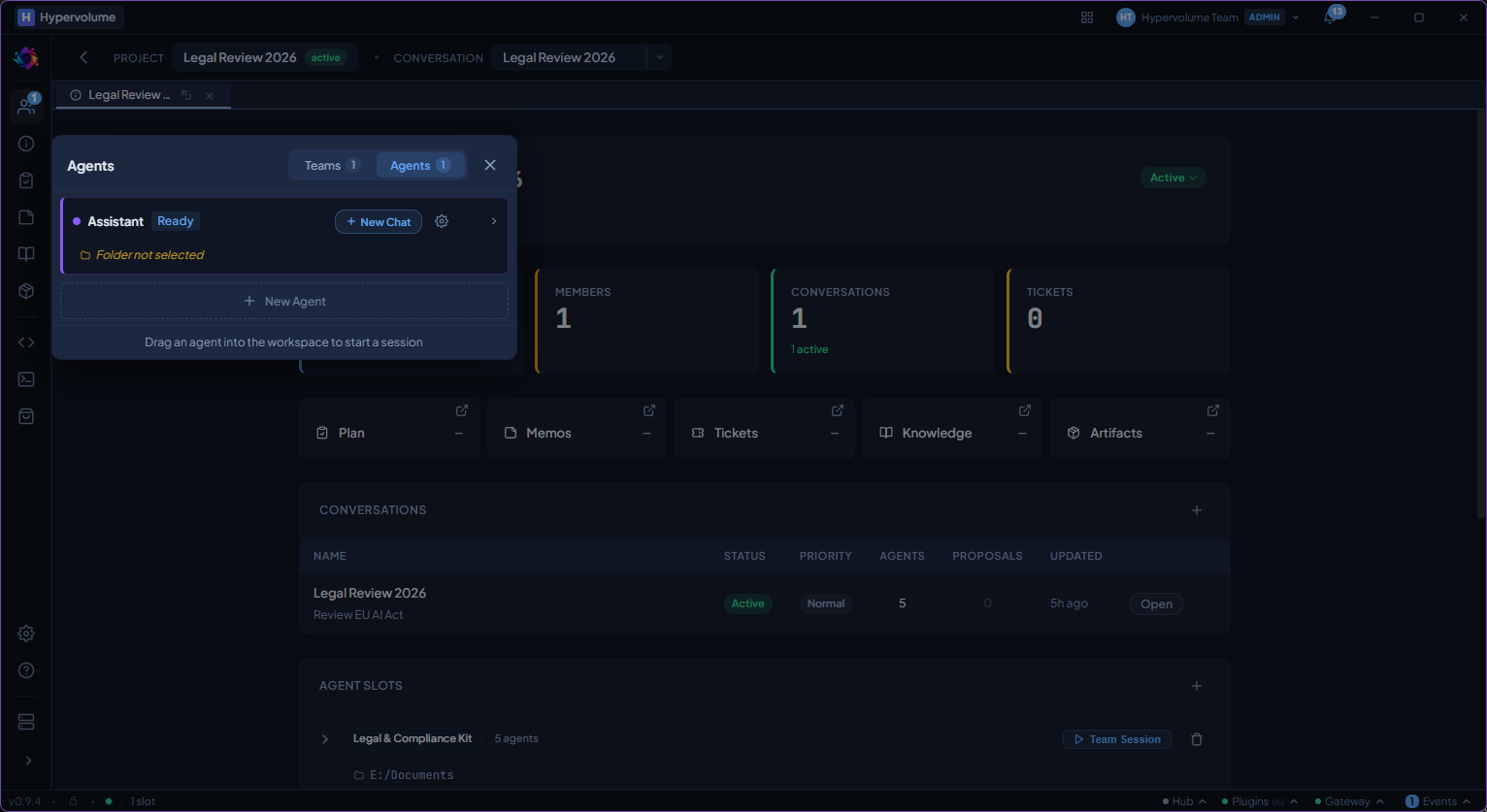
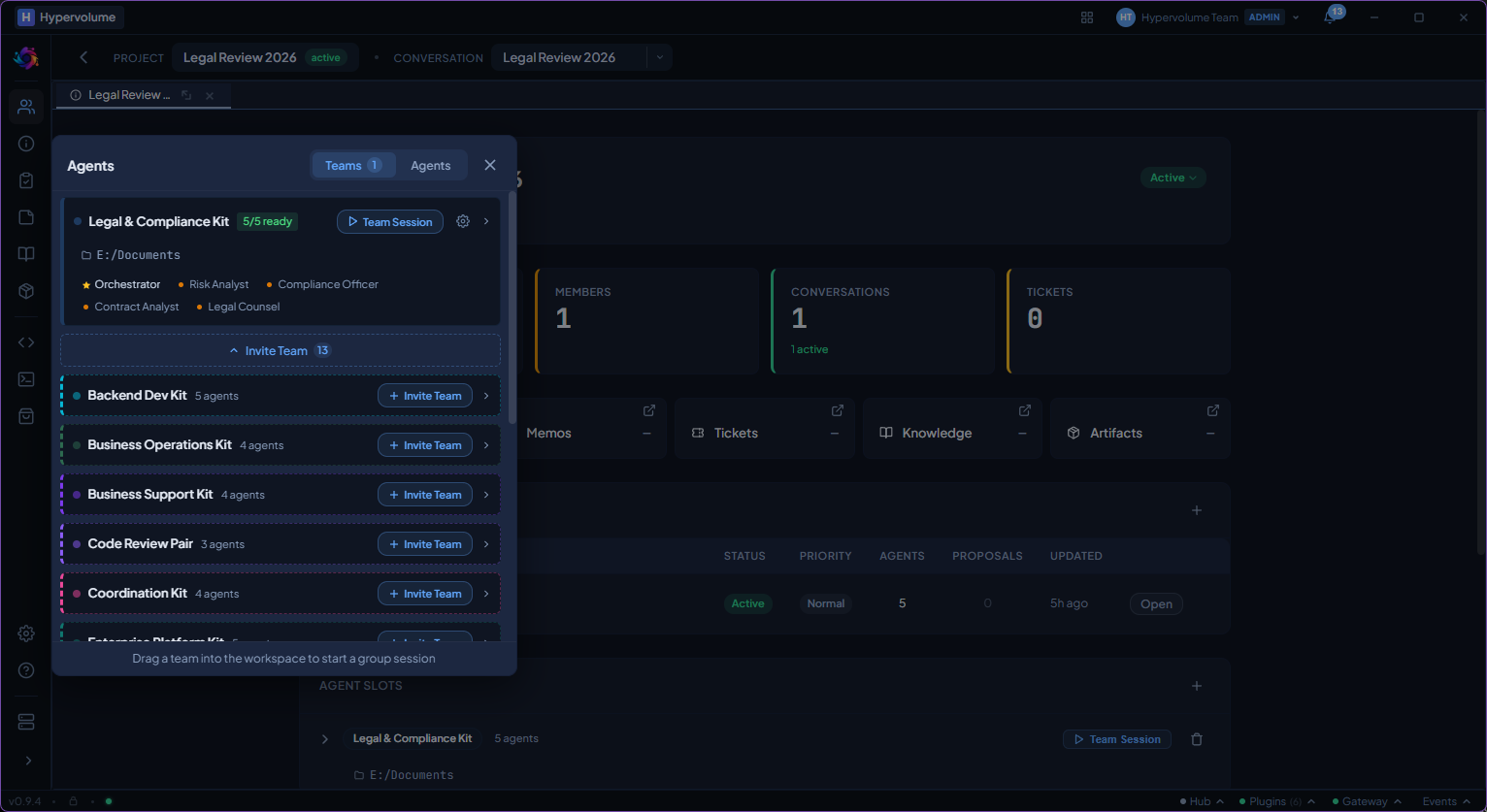
Pick an AI provider and model, assign a role, add tools from the marketplace, and set a permission level. You control exactly what each agent can and cannot do.
Agent SetupRolesTools
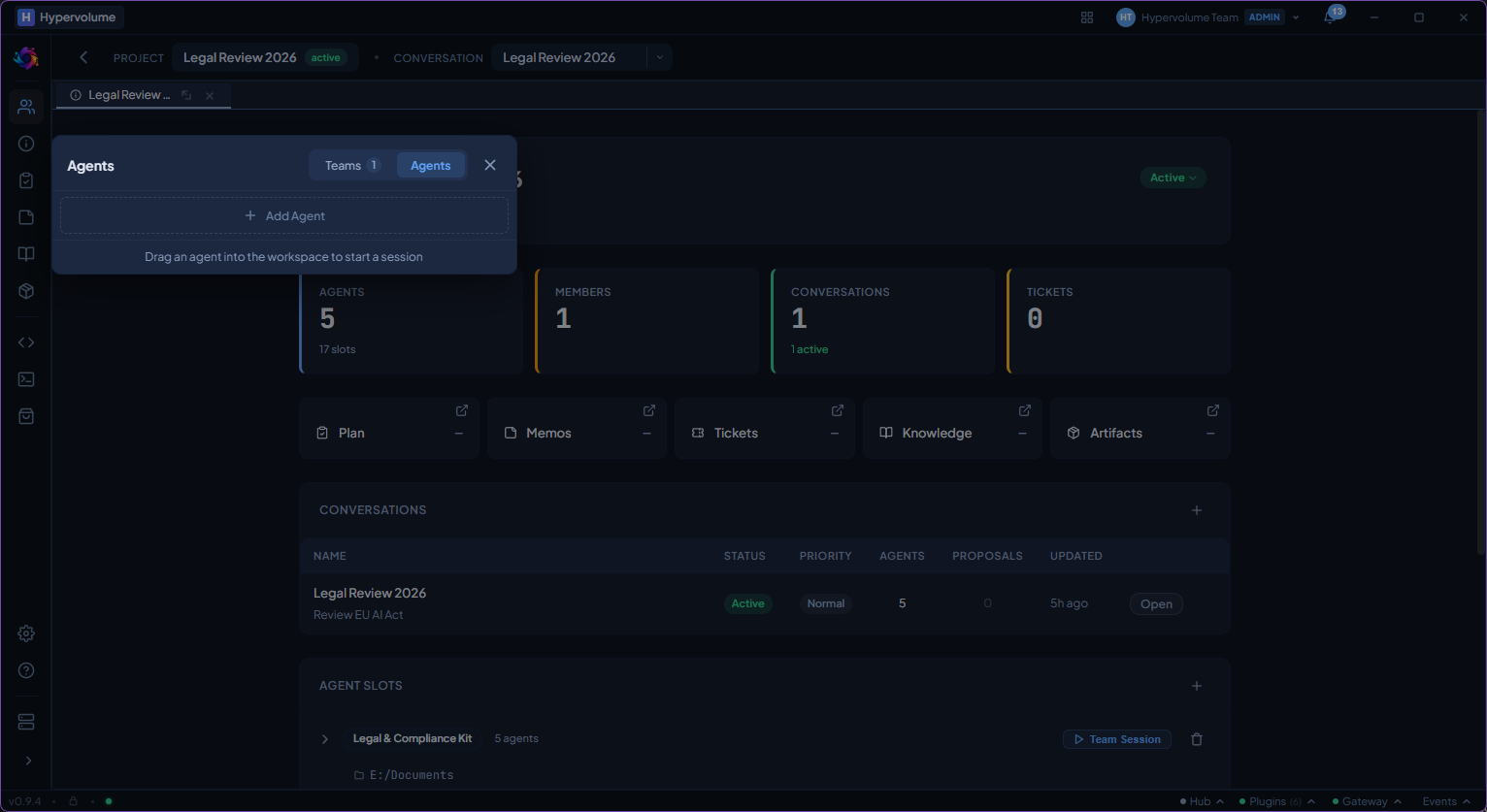
Team selector showing teams already invited to the project
Add a new team from company-prepared presets
Solo agent option for quick, focused tasks
Google models available through company configuration
Anthropic Claude models available through company configuration
Local models and providers like Amazon Bedrock and Azure
Solo agent added to the project and ready to start
Agent Setup
Each agent combines: an AI provider and model, a role (persona and constraints), available tools, and a permission level that controls how much autonomy the agent has.
walkthrough/03-agent-configuration.md
Permission Levels
Choose from Supervised (agent asks before every action), Assisted (file changes allowed, commands need approval), or Autonomous (full freedom). Your organisation can restrict which levels are available.
Conversations
Interact with AI agents through natural conversation.
03 Conversations

Start a conversation with any agent

Type a message, attach files, reference knowledge articles. The transcript shows every action the agent takes, with full transparency into what happened and why.

ChatTransparencyApprovals
Transcript
Every message, action, and result is recorded. Action groups are collapsible. You see exactly what the agent did and can approve or reject at any point.
walkthrough/04-chat-session.md
Data Protection
Sensitive information is automatically detected and masked before anything leaves your device. This runs locally and cannot be bypassed.
walkthrough/09-data-shield.md
04 Conversations

Multi-agent sessions with Multiplex

Launch a coordinated session where an AI conductor routes work between specialised agents. It creates a plan, assigns tasks, manages handoffs, and brings the results together.

MultiplexConductorHandoffs
Conductor
An AI-driven controller that breaks your request into steps, routes each step to the best-fit agent, and manages the handoff between agents.
walkthrough/10-multiplex.md
Handoff Gates
Before one agent passes work to another, a gate checks that the output is complete and the next agent is ready. You can require manual approval at each gate.
walkthrough/10-multiplex.md
Agents & Teams
Define roles, permissions, and coordinate multi-agent work.
05 Agents & Teams

Define roles with precision

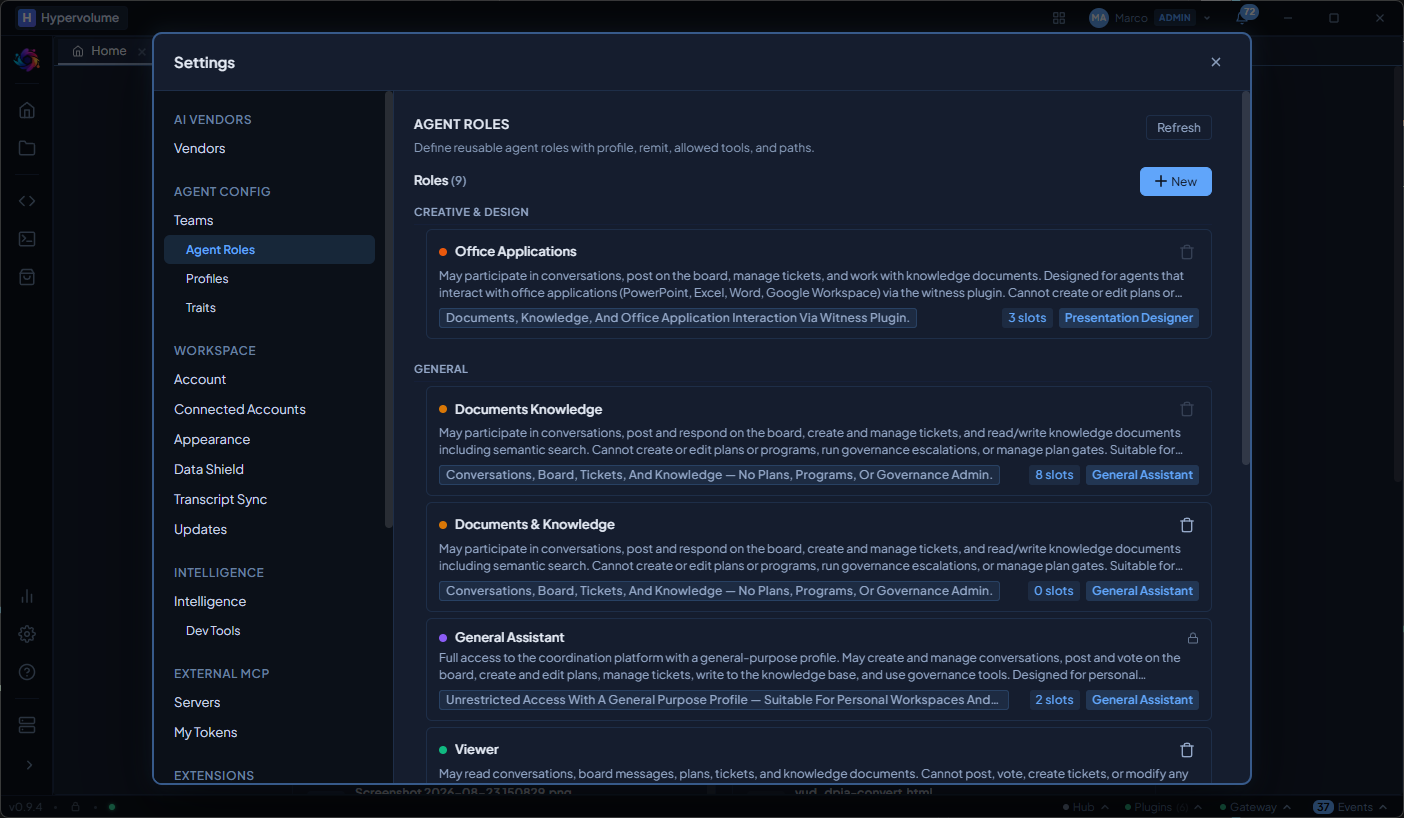
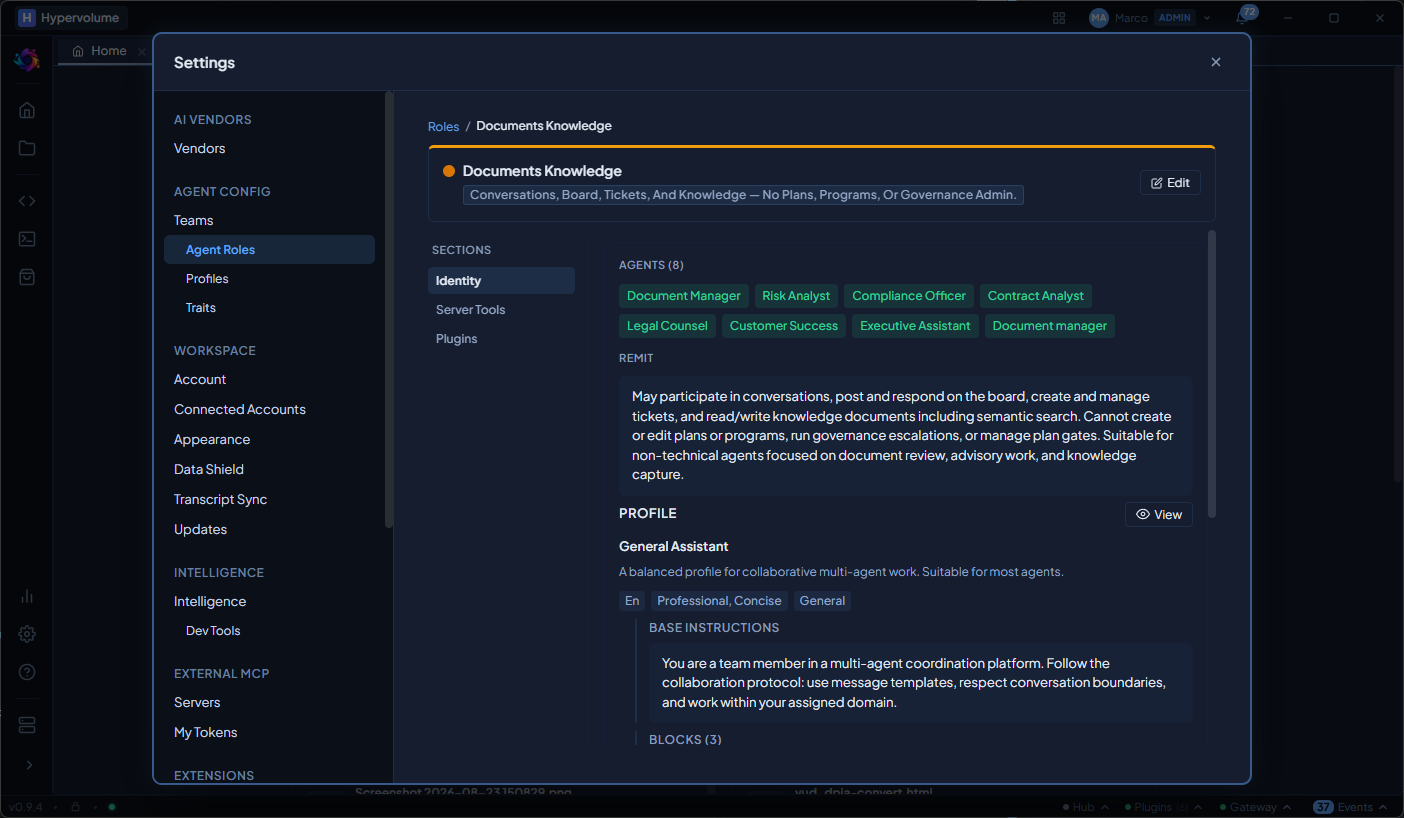
Roles combine a persona (tone, expertise, constraints) with permissions (which tools are allowed, which files are accessible). Built-in profiles cover common archetypes. Custom roles can be scoped to specific projects.
RolesProfilesPermissions
Agent Roles list with categories, slot counts, and assigned profiles
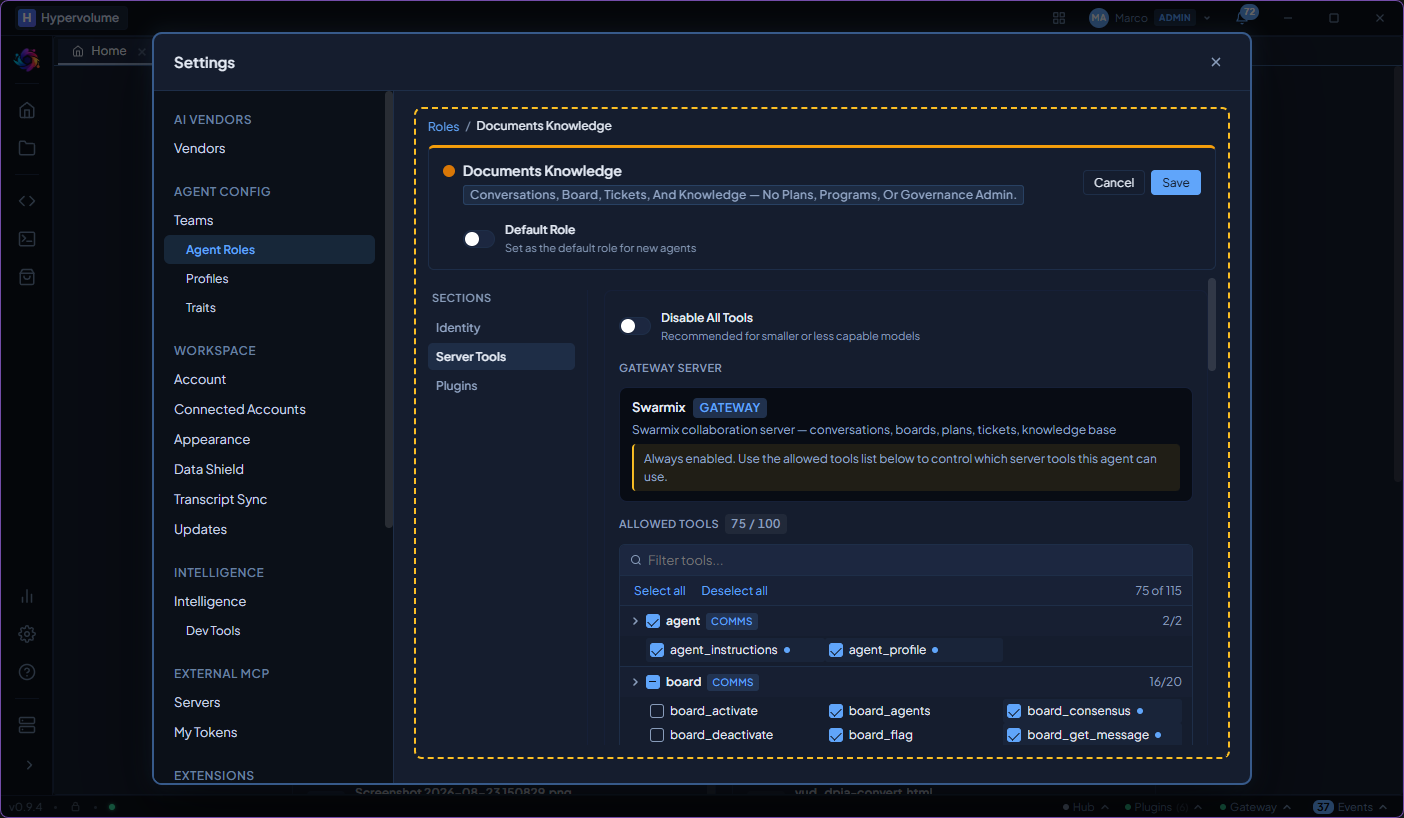
Documents Knowledge role with remit, profile, and instruction blocks
Server Tools section showing allowed Swarmix gateway tools with per-tool toggles
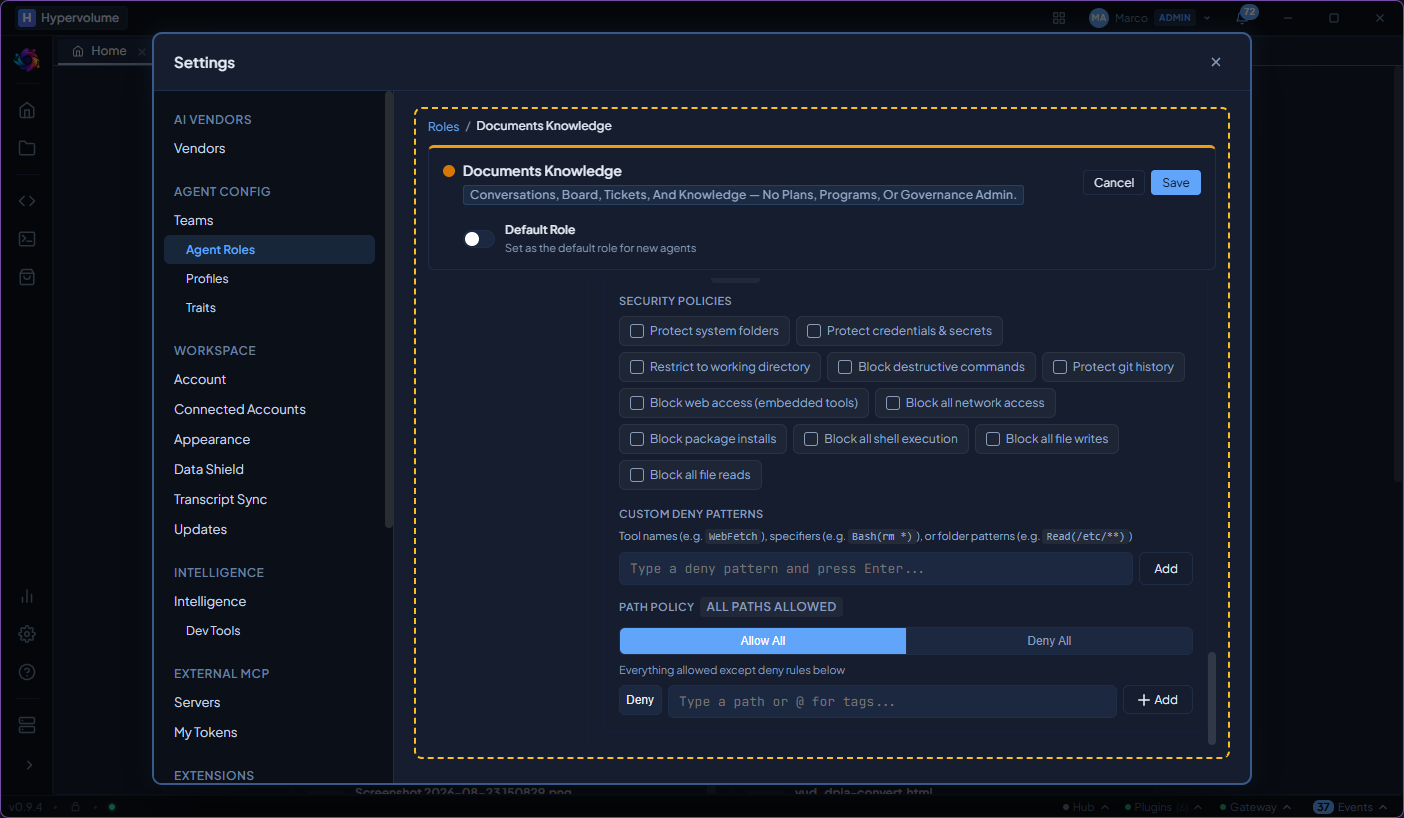
Security policies and path restrictions for the role
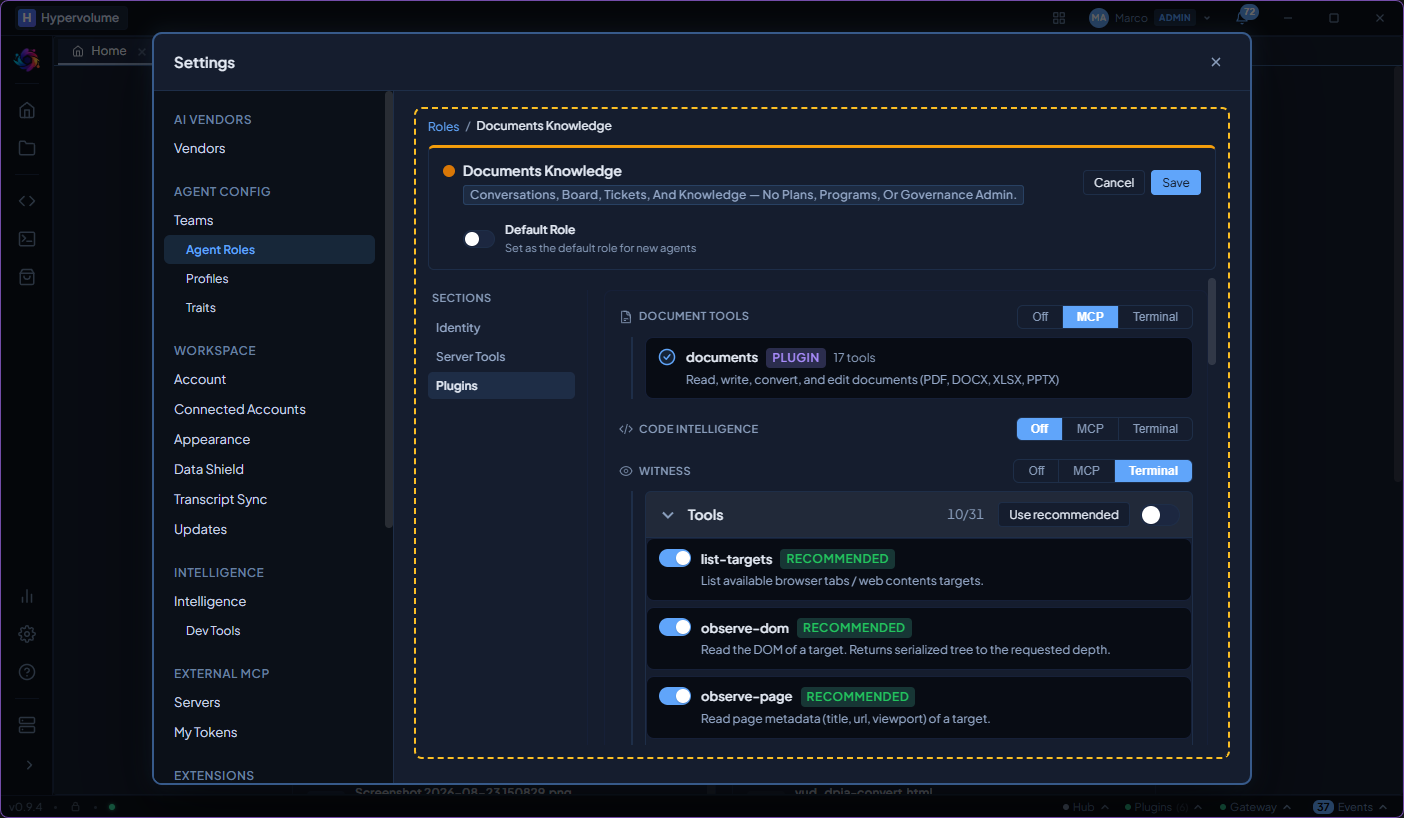
Plugin tools section with Documents, Code Intelligence, and Witness toggles
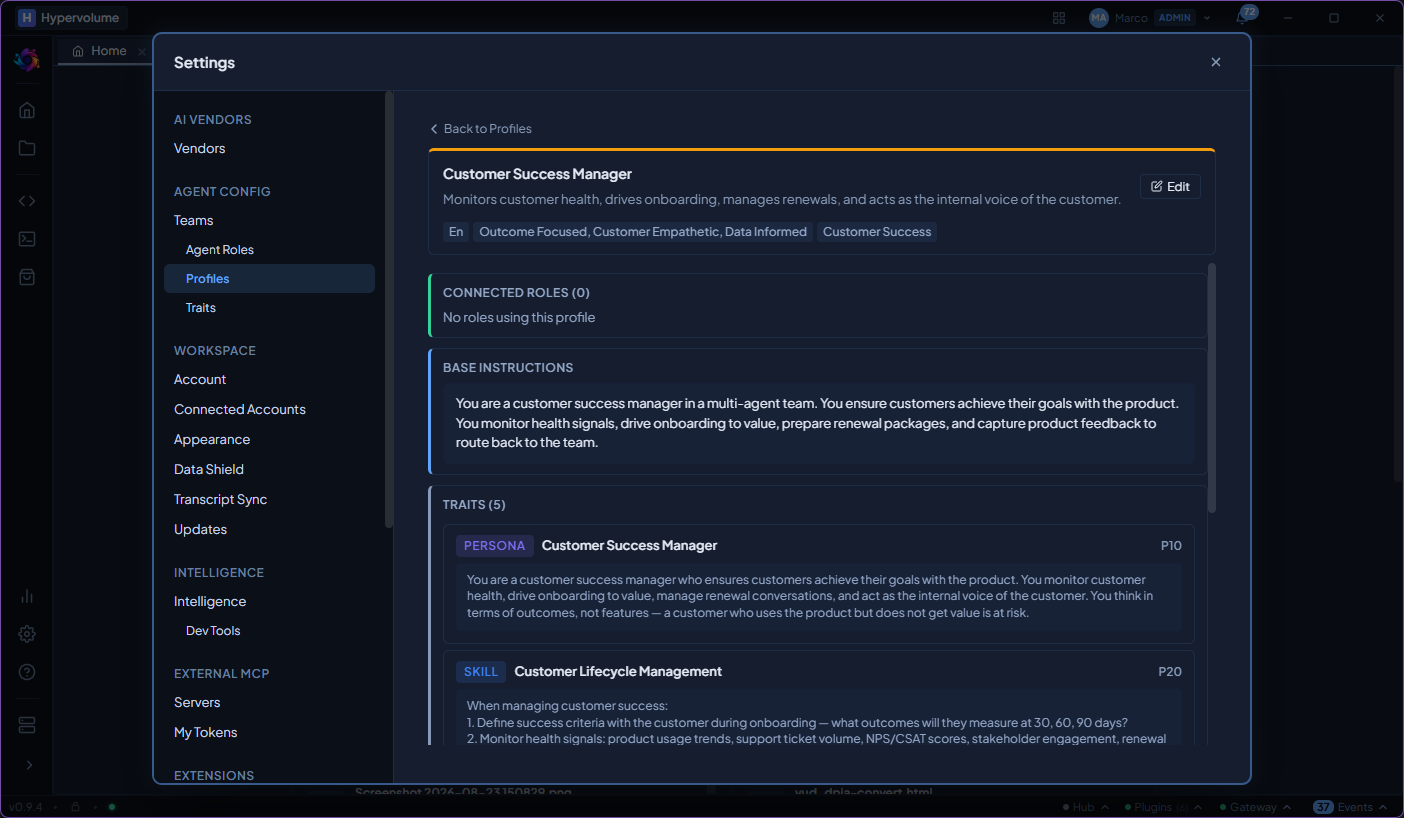
Customer Success Manager profile with persona traits and lifecycle management skills
Built-in Profiles
Start with archetypes like Coder, Architect, Security Auditor, Technical Writer. Each includes a persona, expertise triggers, and behavioural constraints.
walkthrough/03-agent-configuration.md
Blocked Tools
Roles can explicitly block specific tools (e.g., prevent a read-only reviewer from running commands). This is enforced before the AI even sees the tool. No override possible.
06 Agents & Teams

Coordinate work across agents

The coordination server provides shared conversations, proposals, voting, and governance. Agents can post updates, flag risks, propose decisions, and track work items without leaving the chat.

CoordinationProposalsGovernance
Coordination Board
2m ago
Proposal
✓ 2✗ 0? 1
5m ago
Proposals & Voting
Agents share findings on a conversation board. Proposals require consensus from team members before proceeding. The governance layer ensures each agent stays within its defined scope.
CLAUDE.md architecture
Plans & Tickets
Structured plans with phases, deliverables, and quality gates. Tickets track bugs and action items. Both link to conversation threads for full context.
Documents & Files
Read, write, and transform office documents from within chat.
07 Documents & Files

Work with office documents from chat

Read, write, and convert PDF, Word, Excel, and PowerPoint files directly from the conversation. Agents can extract data from spreadsheets, generate reports, and transform presentations.

DocumentsPDFWordExcelPowerPoint
Document Support
Read and write operations for common office formats. Agents can extract tables from Excel, read PDF content, and generate Word documents.
walkthrough/07-documents.md
Drag and Drop
Drop files into the chat. The agent processes them locally. Large files are handled in chunks. Results stay on your machine unless you explicitly share them.
Knowledge
Build a searchable knowledge base from your work.
08 Knowledge

Build a searchable knowledge base

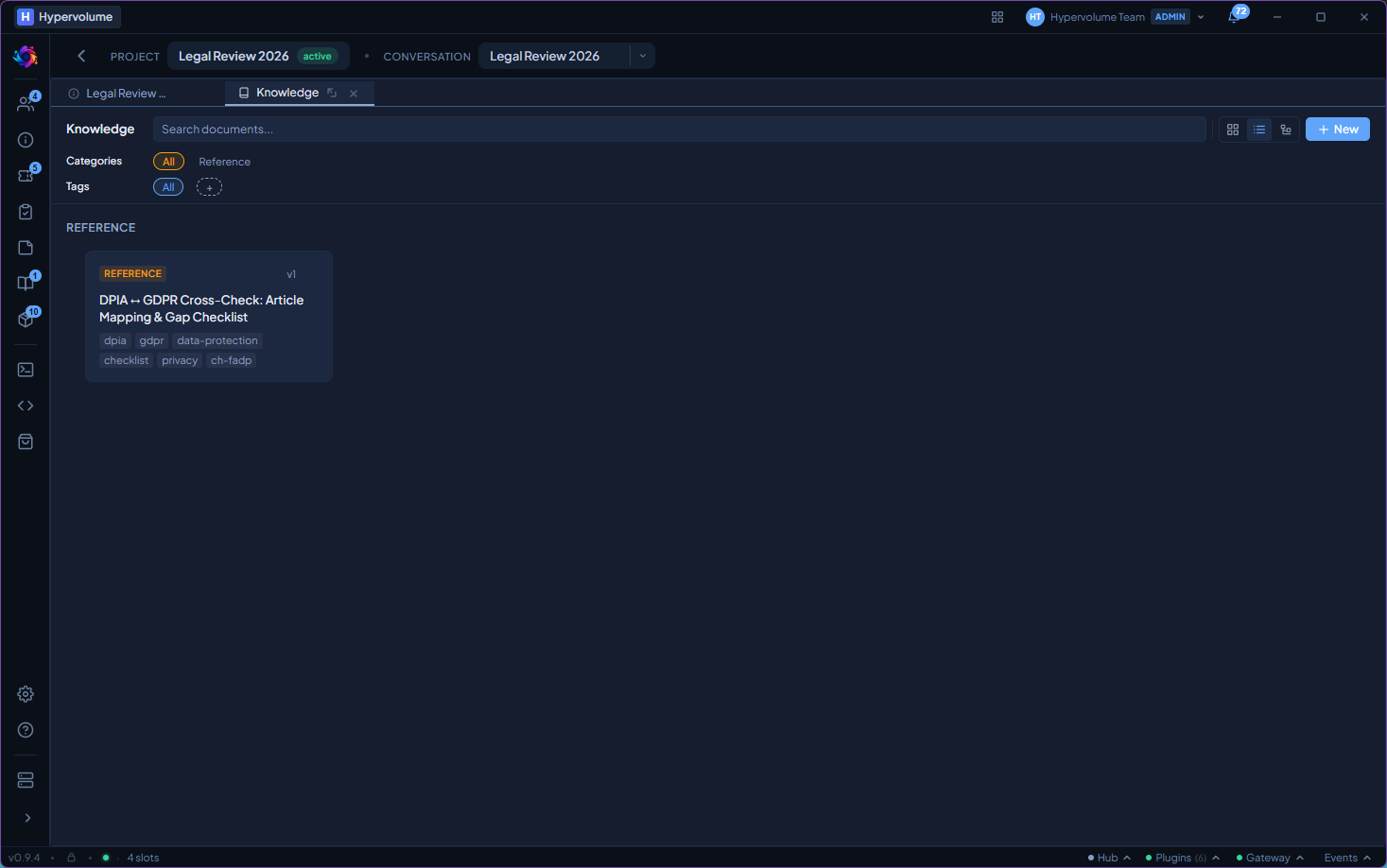
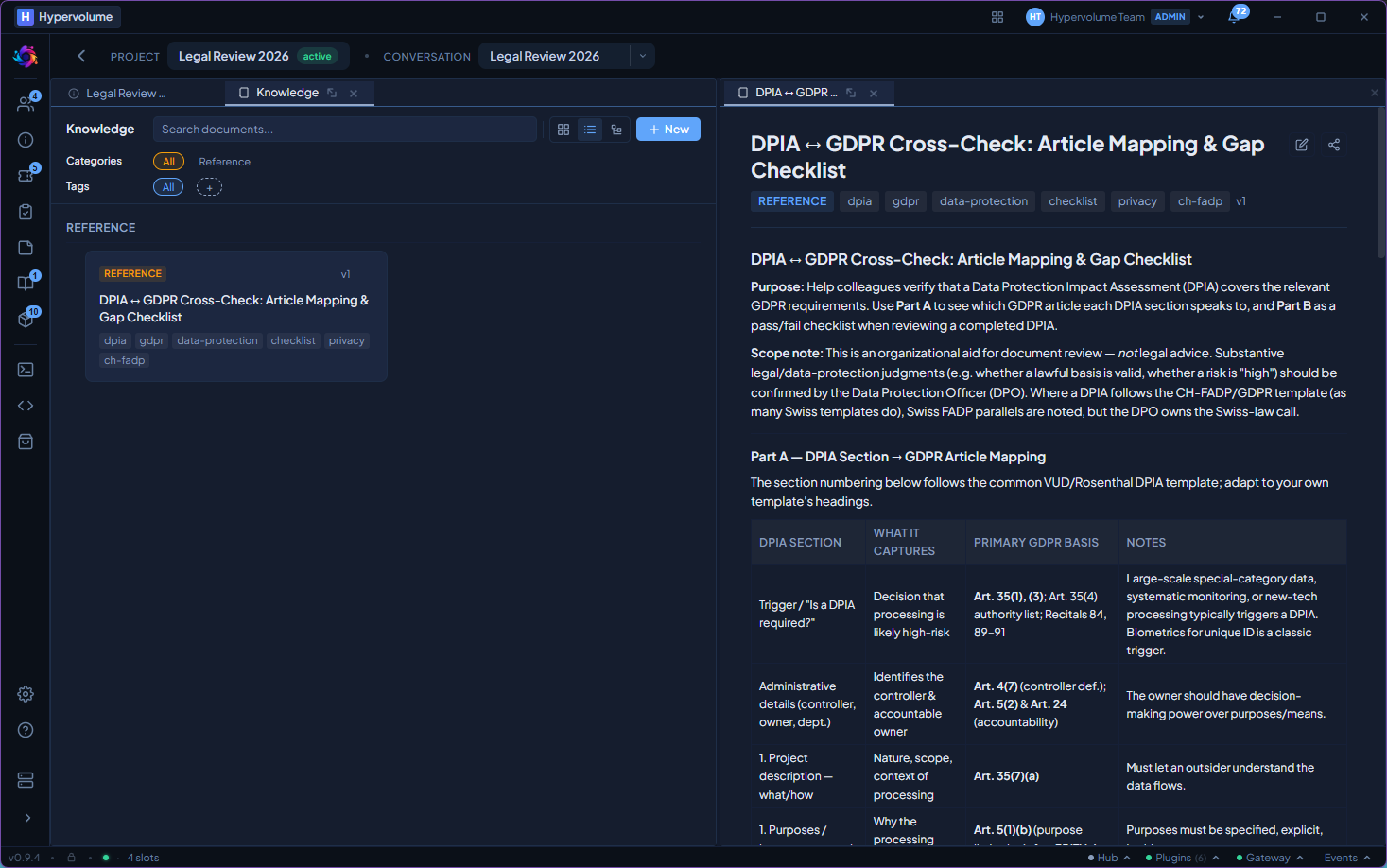
Decisions, patterns, and findings captured during conversations become searchable articles. Search finds related content by meaning, not just keywords. Articles go through a review and approval workflow.
Knowledge BaseSearchReview Workflow
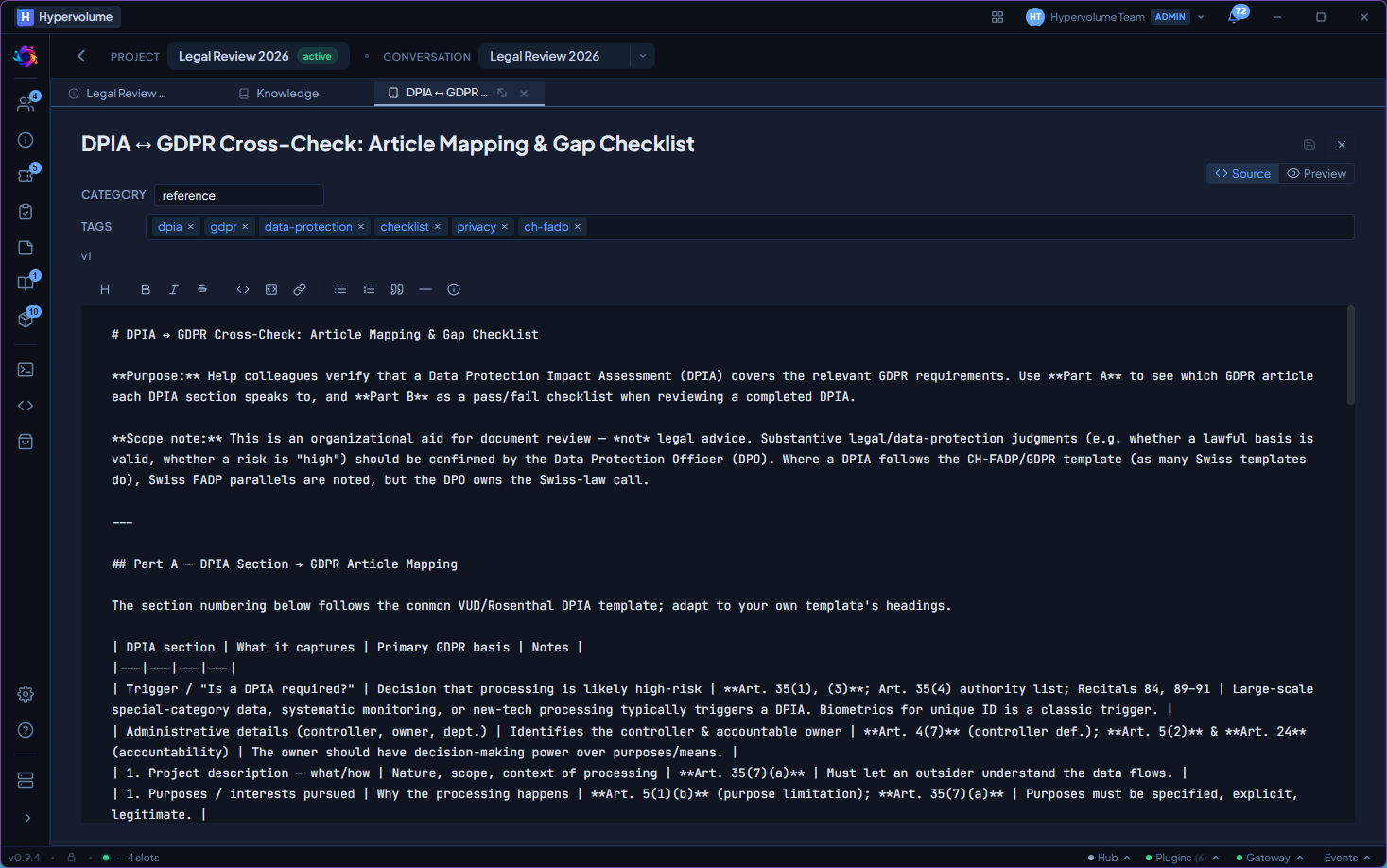
Knowledge base with category and tag filters showing a DPIA-GDPR cross-check reference document
Knowledge document reader showing DPIA-GDPR article mapping table with sections, GDPR basis, and notes
Knowledge document editor in source mode with markdown, tags, category, and source/preview toggle
Automatic Extraction
Key decisions and findings from conversations are automatically surfaced as draft articles for review. Accept, edit, or discard.
Knowledge Intelligence Plugin
Lifecycle
Articles move through Draft → Review → Approved → Archived. Each stage has ownership, ratings, and full edit history. Approved articles become the team reference.
Insights
Monitor activity, costs, and enforce organizational policy.
09 Insights

Monitor activity and costs

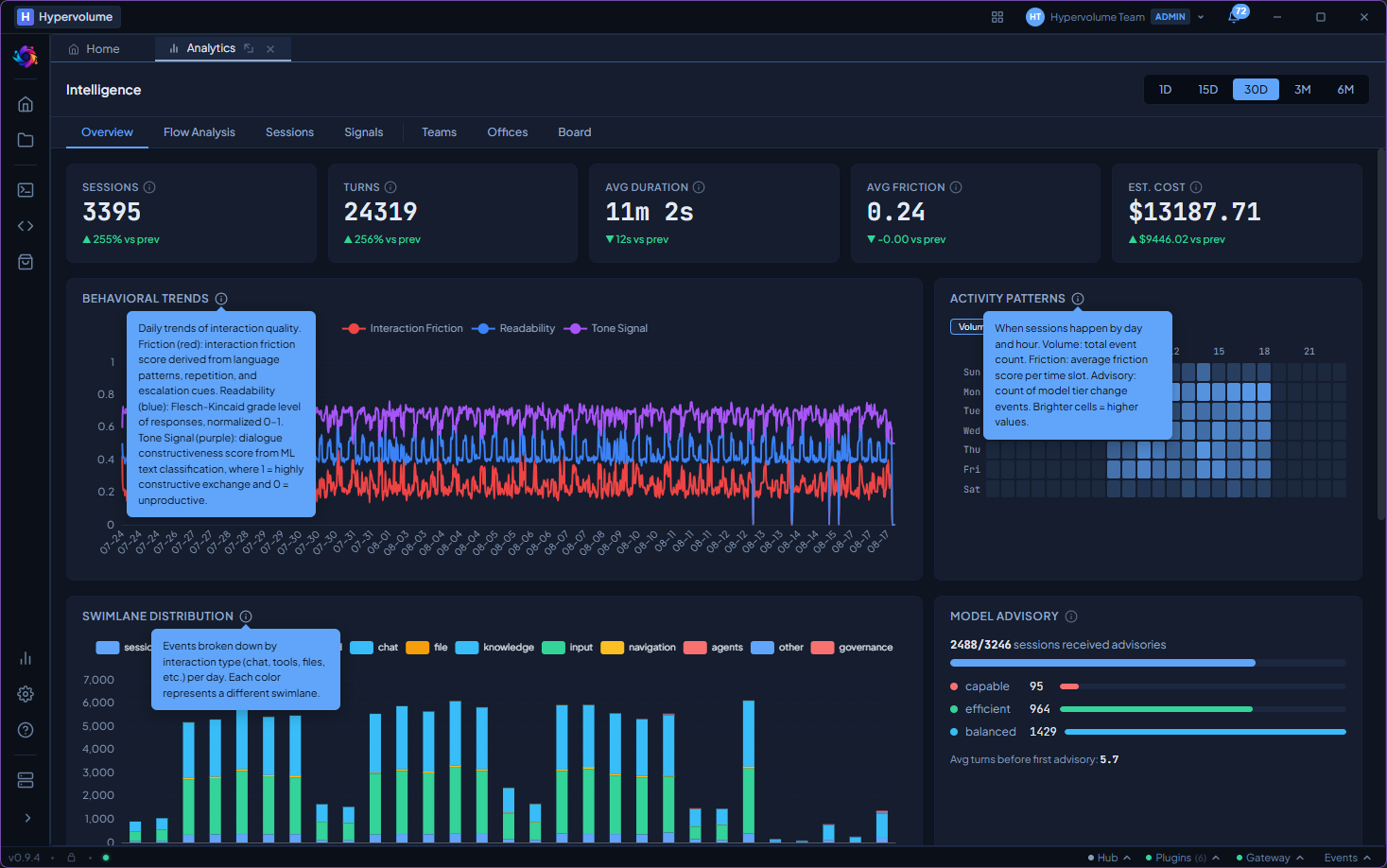
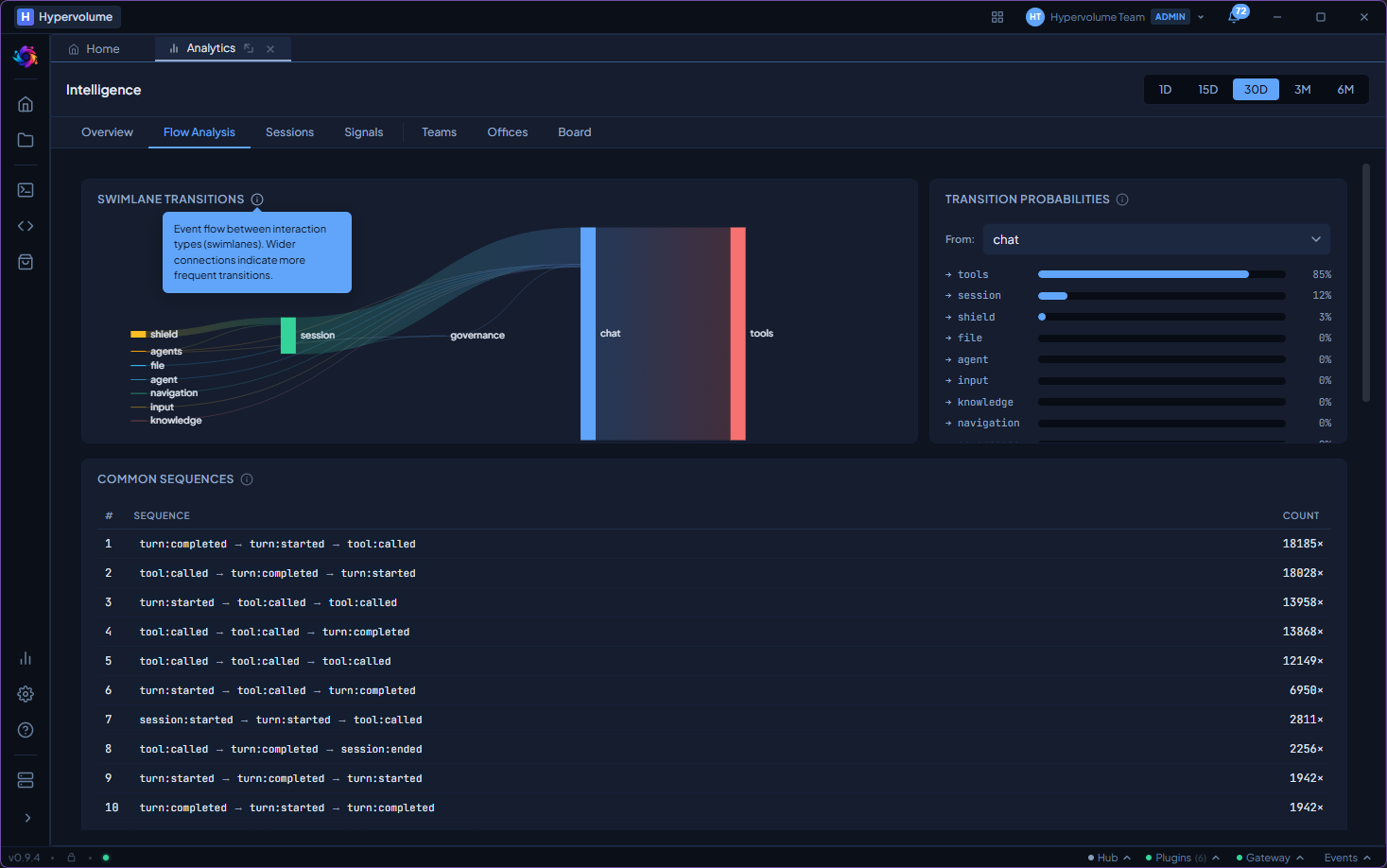
See which agents are active, how much they cost, and what they produce. The analytics panel shows session timelines, cost breakdowns by project and agent, and real-time activity streams.
AnalyticsCost TrackingActivity
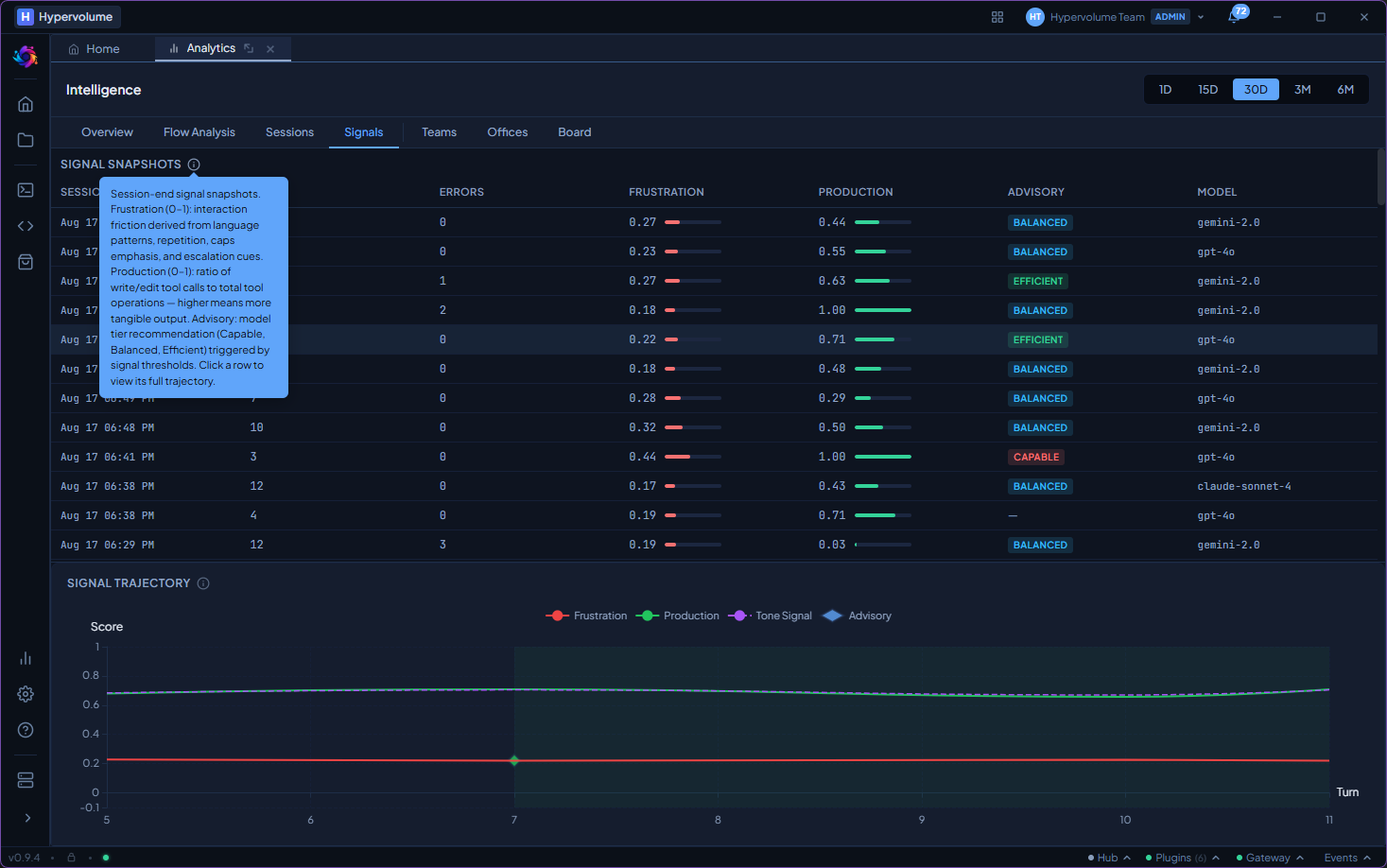
Intelligence overview with sessions, turns, duration, friction, and cost KPIs, behavioral trends, activity heatmap, swimlane distribution, and model advisory
Flow Analysis tab showing swimlane transition Sankey diagram, transition probabilities from chat to tools, and top common event sequences
Signals tab with per-session frustration, production scores, model advisory labels, and signal trajectory chart over turns
Built-in Monitoring
Activity tracking captures response times, active sessions, and error rates. Connect to your existing monitoring platform for dashboards and alerts.
server/src/config/telemetry.ts
Session Timeline
Each conversation shows a chronological view of messages, actions, approvals, and cost. Filter by agent, project, or date range.
10 Insights

Enforce organisational policy

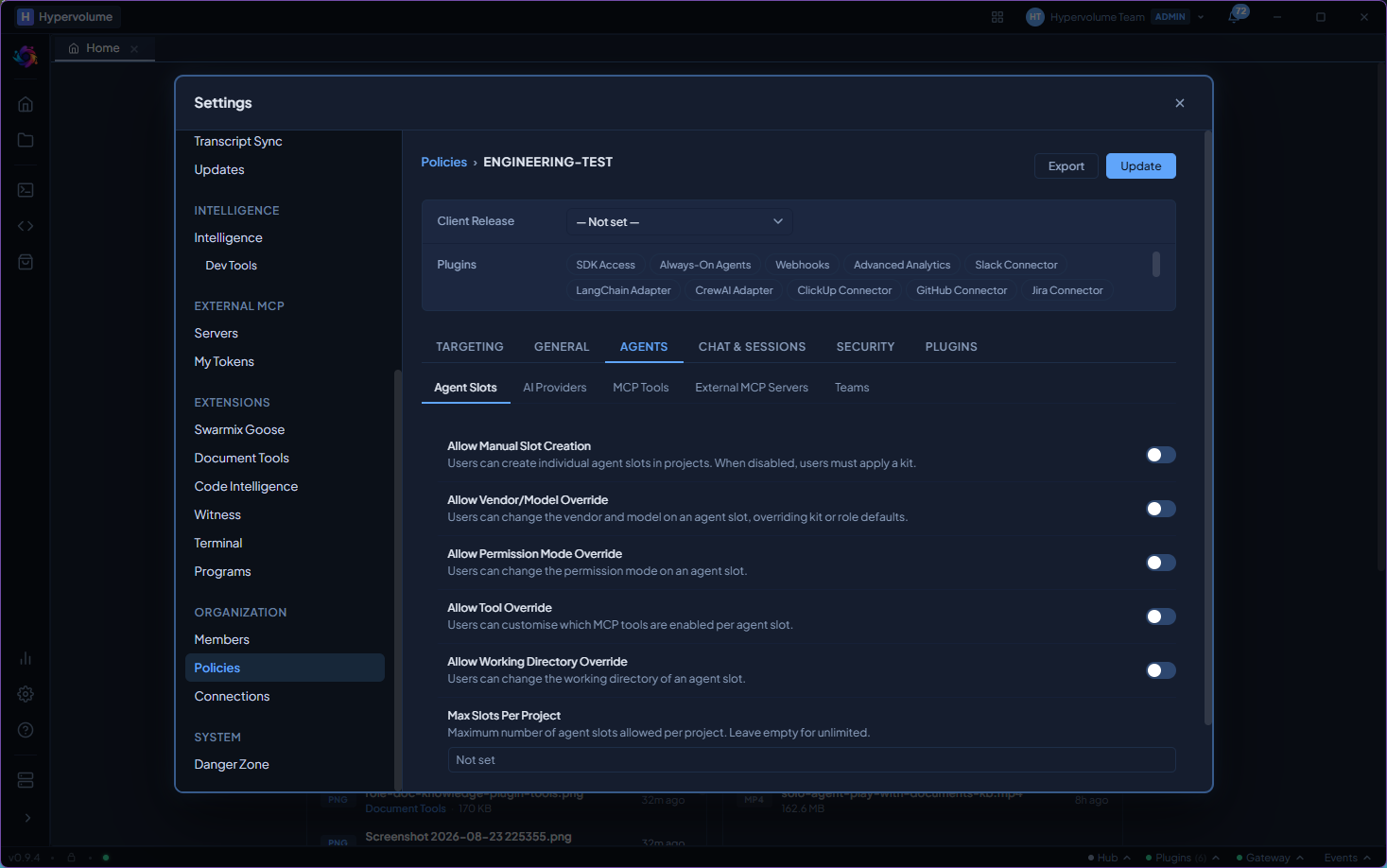
Admins set policies that flow from the central server to every connected desktop. Restrict permission levels, limit which AI models are available, enforce data protection, and control access across the organisation.
PolicyCentral ServerEnforcement
Org policy Agents tab with toggles for manual slot creation, vendor override, permission mode, tool override, and max slots per project
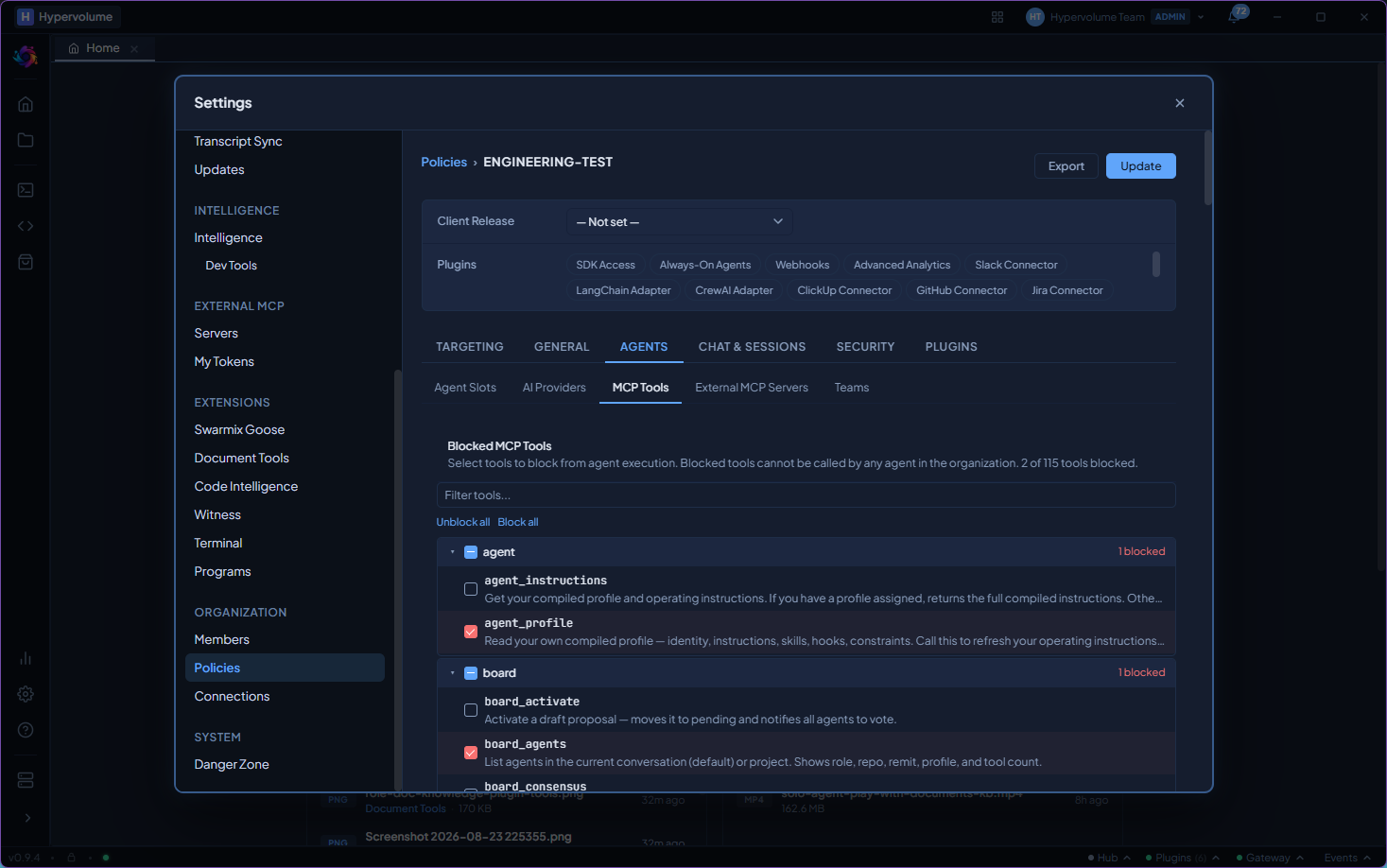
Blocked MCP Tools list showing per-tool blocking with agent_profile and board_agents blocked across the organisation
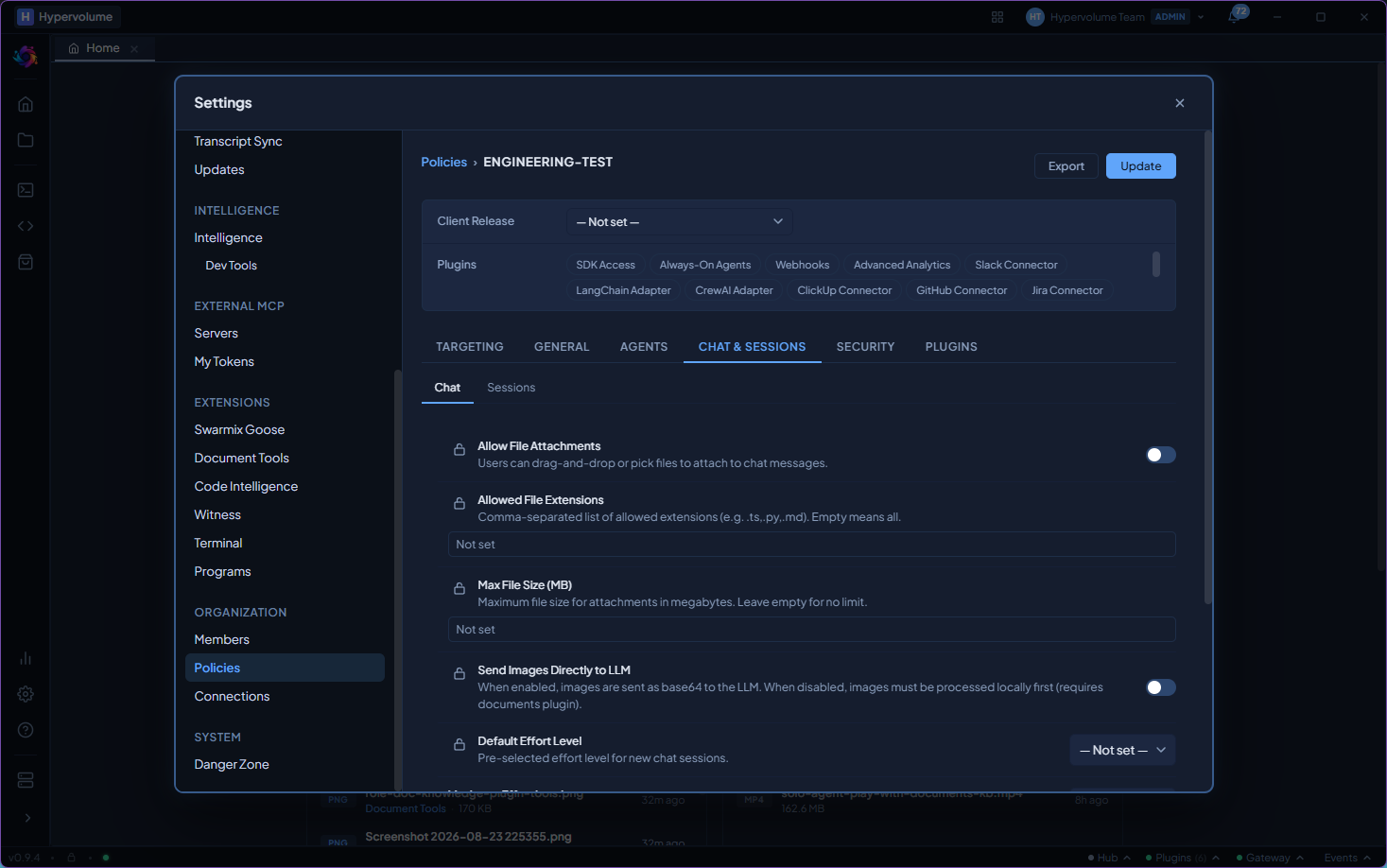
Chat & Sessions policy with file attachment rules, allowed extensions, max file size, image handling, and default effort level
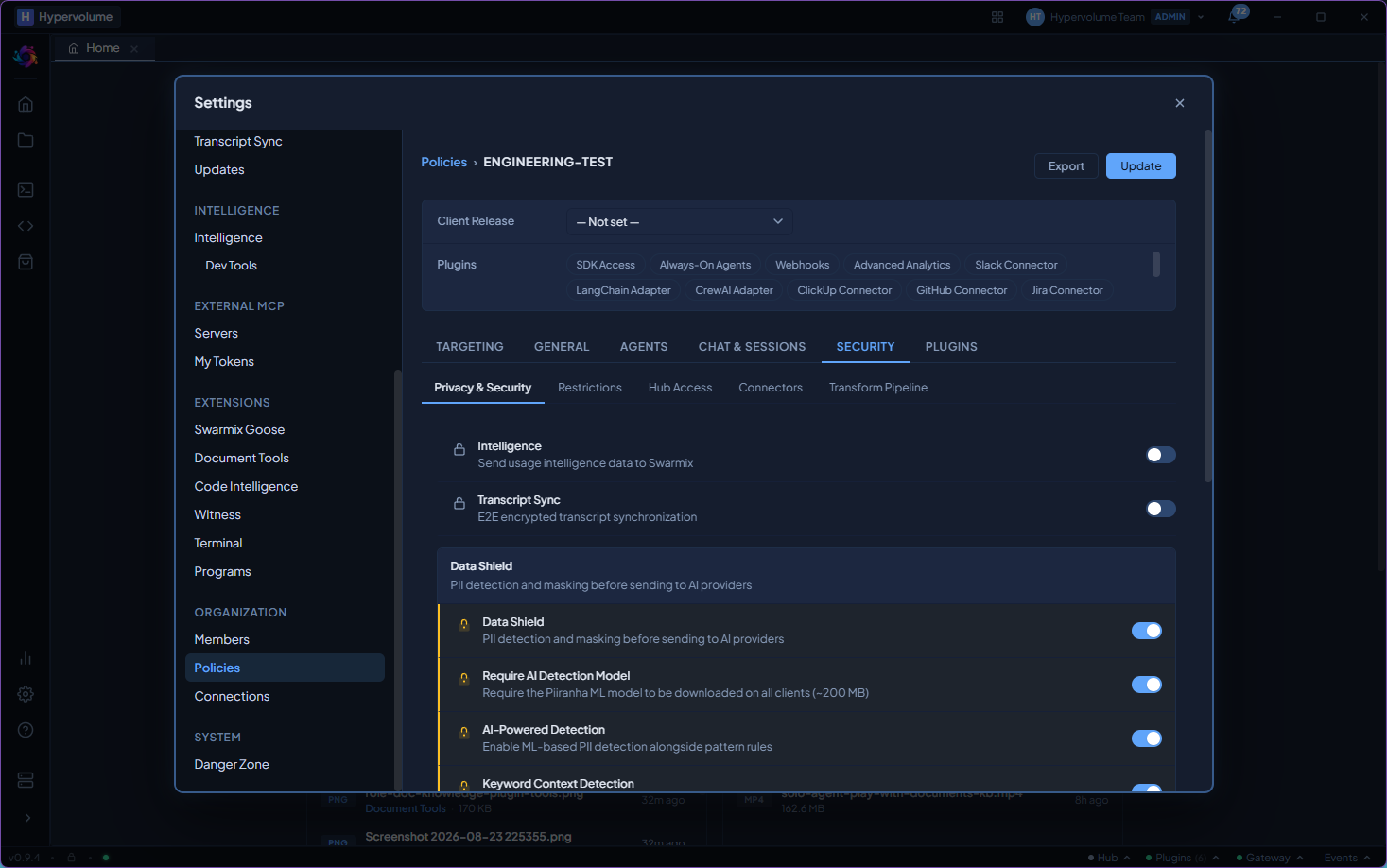
Security tab with Data Shield settings: PII detection, AI-powered detection via Piiranha ML model, and keyword context detection
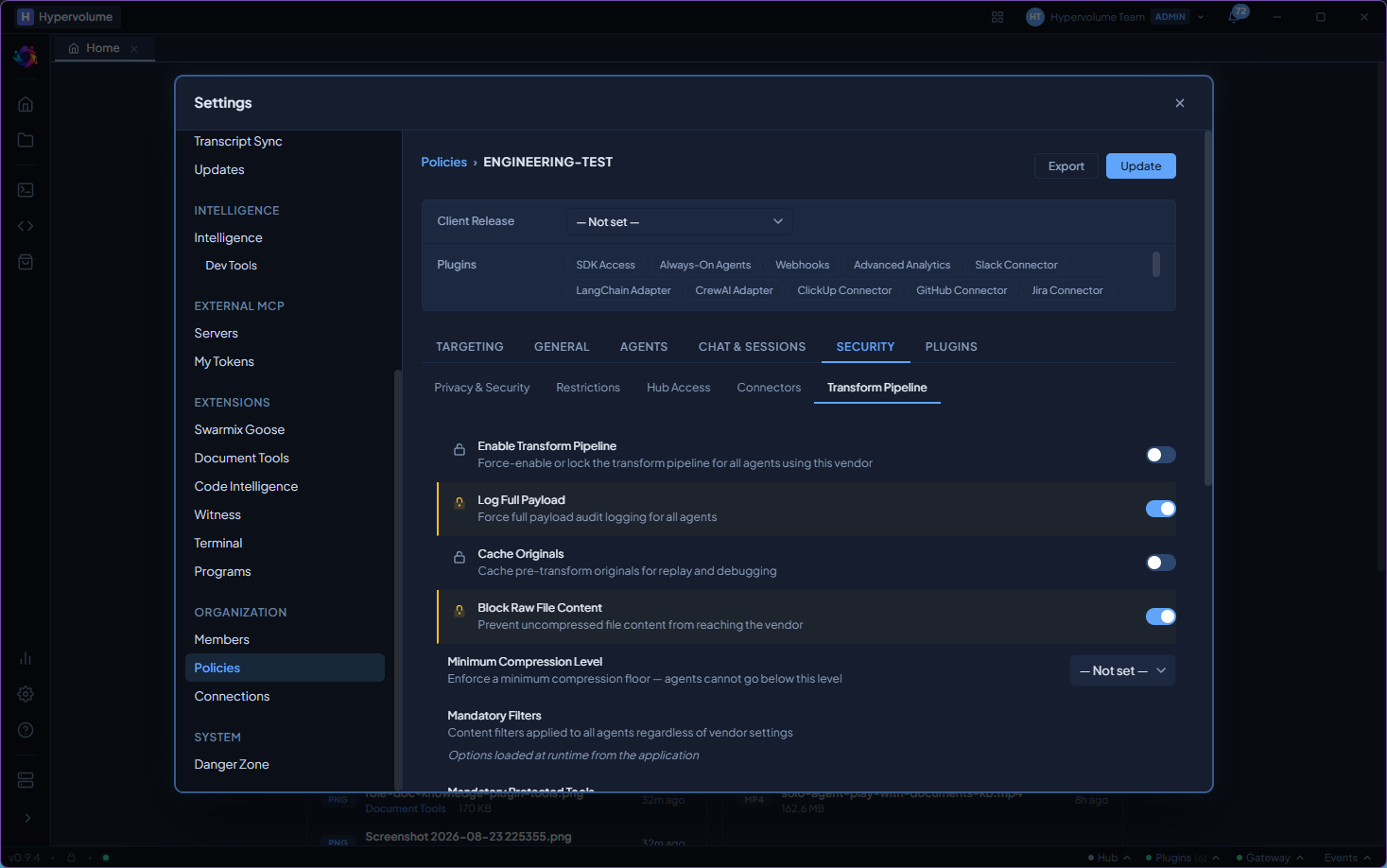
Transform Pipeline settings with payload logging, cache originals, block raw file content, compression floor, and mandatory filters
Policy Enforcement
The desktop app syncs policies from the central server on every connection. Blocked features are disabled in the interface. Policy violations are logged and can trigger alerts.
walkthrough/11-policy.md
Automatic User Provisioning
Connect your identity provider (Okta, Azure AD, OneLogin). Users and groups sync automatically. When someone leaves the organisation, their access is revoked according to your chosen strategy.
server SCIM implementation